Cool Sites and Cool People Doing Cool Things
What's good on Netflix for kids for July and August?
Top kid options on Netflix right now include KPop Demon Hunters, Leo, and The Mitchells vs. the Machines.
Top Movies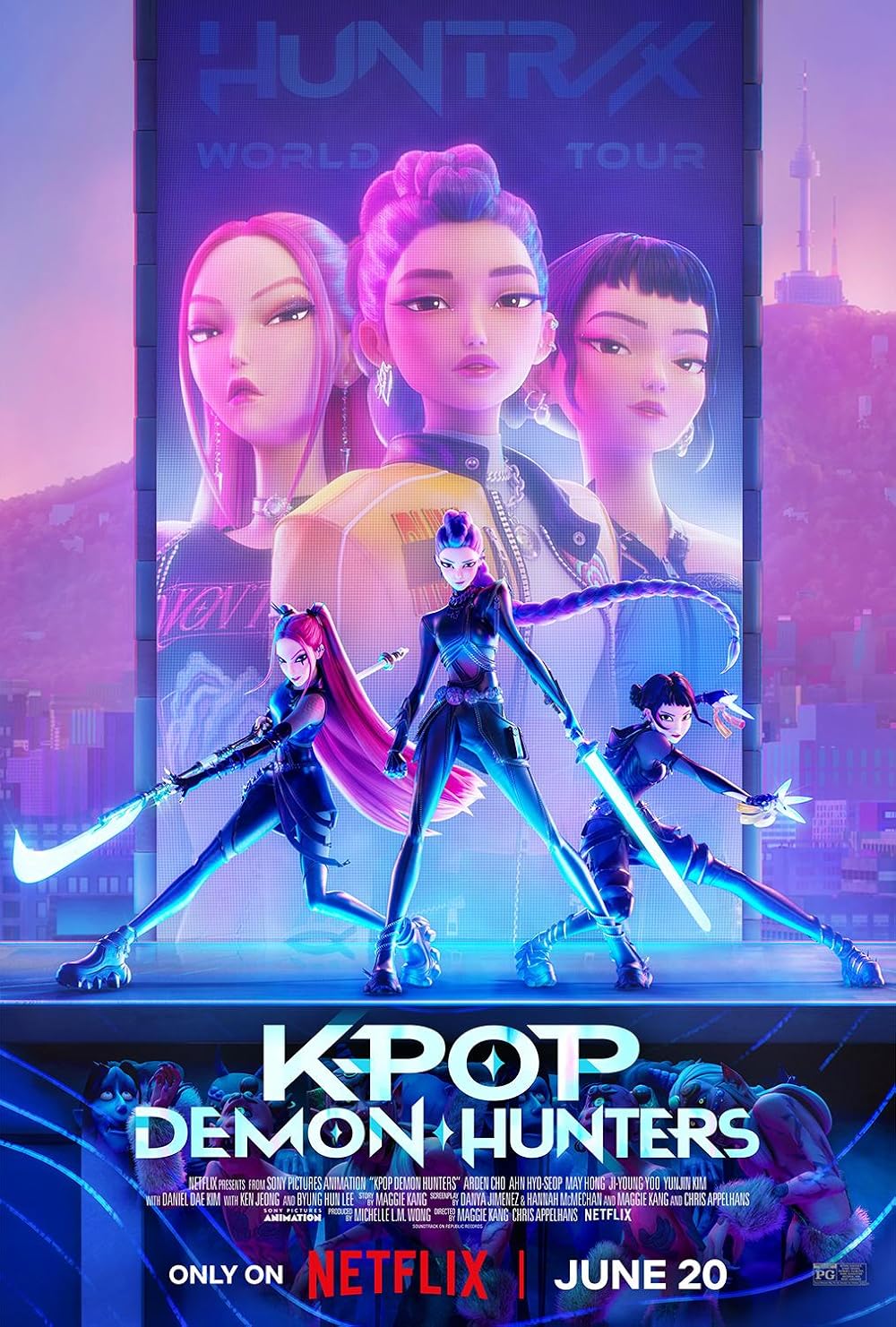
-
KPop Demon Hunters: A colorful animated film about a music group that fights scary monsters.
-
Spider-Man: Into The Spider-Verse: After being bitten by a radioactive spider, Brooklyn teen Miles Morales gets a crash course in web-slinging from his alternate-dimension counterparts.
- Swapped: A tiny woodland creature and a majestic bird suddenly swap bodies, forcing them to team up to survive the wildest adventure of their lives.
- Goat: A young goat chases his dream of playing professional roarball as he revitalizes a legendary team and proves his small stature packs a big punch.
- Leo: A funny animated comedy starring Adam Sandler as a 74-year-old lizard class pet.
- The Mitchells vs. the Machines: A wacky adventure about a normal family trying to save the world from machines.
Fun TV Shows
- Hilda: A magical animated show about a brave blue-haired girl who explores a city full of friendly monsters
- Sesame Street: The classic educational series featuring Big Bird and friends.
- Miraculous: Tales of Ladybug & Cat Noir: An exciting action cartoon about teenage heroes saving Paris.
The Unhurried Child in a High Speed World
 In this Case Study, Tsitsi Mutendi draws on the philosophy guiding Zimbabwe's largest Montessori school to argue that we can prepare children for artificial intelligence without sacrificing what makes them human, insisting that technology remain a tool and never the teacher. She reframes the unhurried child not as one falling behind, but as one being given room to grow depth, character, and belonging.
Case Study | MediaEd Insights | Digital Ubuntu Edition | July 2026
Written by Tsitsi M Mutendi
Protecting Hunhu/Ubuntu in the Age of AI (Media Education Lab)
_________________________________________________________________________________________
 FOR IMMEDIATE RELEASE: June 5, 2026
KIDS FIRST! Partners with the UK’s Children’s International Film Festival for a Global Youth Cinema Exchange
SANTA FE, NM — KIDS FIRST! is proud to announce an exciting new international partnership with the Children’s International Film Festival (CIFF) in the United Kingdom. In a vibrant cross-cultural exchange, KIDS FIRST! has curated a special showcase of 10 exceptional films made by student and independent youth filmmakers aged 16 and under.
Representing a global wave of emerging talent, the curated collection features young directors from the USA, Australia, the UK, India, Taiwan, Slovenia, Belgium, and New Zealand. Screened alongside student films from across the UK, this international lineup represents an extraordinary surge of youth creativity.
The official KIDS FIRST! selection includes:
- Boots and Bandits by Indie June England (USA)
- Coyotes by Bryn Wright (USA)
- Grandpa's Camera by Lang Qin (Australia)
- Navigating The Net by Dale Forder (United Kingdom)
- Manzar: A Portrait Of An Artist by Danicca Bajaj (India)
- Spotlight by Cheng Ying Liu (Taiwan)
- Martin Krpan: The Mountain Hero by Izak Kovacic (Slovenia)
- The Magic Flashlight by Indie June England (USA)
- The Other Planet by Barbara della Faille (Belgium)
- The Psychic Arts Academy by Kayla Cache, Cohen Murphy, Dawn Glover, and Pamela Kaval (New Zealand)
The films will be showcased on Thursday, June 18, 2026, across iconic Hastings venues, including the White Rock Theatre, The Benbow Arts Centre, and the Hastings Museums w. The festival program features engaging filmmaking workshops, and all KIDS FIRST! selections are nominated for awards to be presented at the evening's Awards Gala. Major industry partners supporting the event include BAFTA, the National Film and Television School, Into Film, Ciné Schools, Hastings Contemporary, The Bright Foundation, and Phase Worldwide.
"This partnership with the Children’s International Film Festival warms my heart," said Ranny Levy, Founder and President of KIDS FIRST!. "It’s incredibly rewarding to share this extraordinary group of films from our collection with an expected audience of 2,500 kids and families in the UK. George Young and his staff have been a true pleasure to work with."
"We are so pleased that leading organizations from the world of film, TV, and gaming are supporting the festival again this year. We are incredibly lucky to have such an amazing mix of venues and supporters bringing a unique feel to the festival in Hastings." CIFF aims to be the largest children’s film festival in the UK, dedicated to empowering and inspiring youth to bring their creativity into the world. For more information, visit ciffest.org.
What's up at Netflix for June?
This month, Netflix is adding several fan-favorite family franchises and new animated series , led by the highly anticipated Season 2 of Avatar The Last Airbender and Sesame Street: Volume 3.
- Avatar The Last Airbender: Season 2: Premieres June 25. Continues Aang's journey to master the elements in the Earth Kingdom, introducing fan-favorite character Toph.
- Sesame Street: Volume 3: Arrives June 8.
Family-Friendly Movie Additions (June 1)
Netflix has dropped a massive lineup of nostalgic, classic family films, including:
- Scooby-Doo and Scooby-Doo 2: Monsters Unleashed
- The Karate Kid (1984) and its sequels (Part II and Part III )
- Rookie of the Year Bee Movie Stuart Little (Added June 15)
- The Smurfs (Added June 15)
- Percy Jackson & the Olympians: The Lightning Thief & Sea of Monsters (Added June 15)
 May 20 @ 4 p.m. ET for a free webinar!
Join award-winning educator and filmmaker Christoph A. Geiseler for a hands-on session focused on teaching video literacy in any classroom.
Drawing on his work with global institutions, he will share concrete strategies and adaptable tools that make video creation accessible for learners of all ages and practical strategies that help educators move students from passive consumers to intentional storytellers. This session centers on making video production and video literacy education a meaningful, everyday part of learning.
Educators will walk away with:
• Strategies for how to use adaptable video creation tools
• Approaches for teaching creative storytelling to all levels of learners
• Accessible methods for incorporating video literacy and video creating into classrooms
This session is intended for educators at all levels through K-12, as well as librarians and community learning specialists.
https://us02web.zoom.us/webinar/register/WN_U0l_DkBuQxG0w0y_fw3wqg#/registration
 Christoph Geiseler
Founder· One Minute Academy
Christoph Alexander Geiseler, also known as Ambassador .X, is an award-winning educator and film director from Los Angeles, CA. As the founder and CEO of the One Minute Academy, he has collaborated with 85 US embassies, the National Geographic Society, Adobe and Princeton University to teach his one minute video and business methodology to thousands of diplomats, journalists and entrepreneurs around the world.
To Register, go here: https://us02web.zoom.us/webinar/register/WN_U0l_DkBuQxG0w0y_fw3wqg#/registration
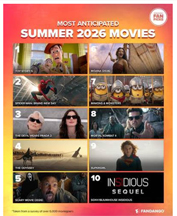 Fandango, the nation’s leading online movie ticketing service, today revealed the results of its annual Moviegoing Trends & Insights Study, ahead of CinemaCon, Cinema United’s official convention taking place from April 13th – April 16th in Las Vegas. Surveying over 5,000 moviegoers, this year’s study highlights how generational differences are shaping the future of theatrical moviegoing, with Gen Z and Millennials not only attending movies more frequently but also spending more per trip and seeking out enhanced, experience-driven offerings that extend beyond the screen.
The appetite for summer moviegoing remains strong, with 76% of all moviegoers surveyed planning to see a movie in theaters this summer. Summer 2026 is gearing up to make quite a splash with titles like Toy Story 5, Spider-Man: Brand New Day, The Devil Wears Prada 2, The Odyssey and Scary Movie (2026) leading the top 10 most anticipated summer movies list, offering a nostalgic adventure for all audiences and all ages.
The Complete 2026 Moviegoing Trends & Insights Study is available here:
The top 10 most anticipated summer movies are:
- Toy Story 5
- Spider-Man: Brand New Day
- The Devil Wears Prada 2
- The Odyssey
- Scary Movie (2026)
- Moana (2026)
- Minions & Monsters
- Mortal Kombat II
- Supergirl
- Sony/Blumhouse Insidious
Music Education & Media Literacy
 There is something magnificent about the power of music in bringing people together, beyond the barriers of day to day life. While formal musical education is imperative for many people’s development, it’s the casual connection from sharing the enjoyment of music as a human behavior, rather than a skill to learn, that can be therapeutic and transformative for young people and adults alike. In this edition of the MediaEd Insights, you’ll find a collection of writings that reflect the wide range of impact music can have (and has had) on all of us.
Building Cognitive Resilience Through Innovative Play
Modern childhood is going through a huge change, and more and more of it is focused
on passive digital consumption instead of active physical activity. The main problem for parents and youth development experts today is finding places that can balance out
screen time. The best places for kids to play are ones where they can move around a
lot and work on their social and motor skills at the same time. It's important to find a
balance between safety and exploration because the best developmental experiences
happen when a child is a little bit outside of their comfort zone. Modern developmental
challenges require innovative environments that prioritize both physical movement and
digital engagement. A premier kids birthday party place - Max Adventures helps solve this issue by providing a high-tech environment that focuses on unique and private
experiences. Finding an adequate space, such as a kids birthday party place - Max
Adventures, can be difficult when seeking a balance between safety and high-energy
stimulation. These times of being active are very important for kids to build their
coordination and confidence, which they will use in school and in their social lives later
on. more

Our Publishing Partner: Upscale Magazine
 Upscale is the ultimate lifestyle magazine addressing the interests and aspirations of stylish, informed, progressive African-Americans. On our pages, you will find the latest news in entertainment, beauty, fashion, health, fitness and travel. It is more than a magazine, it is a lifestyle. It is a place to be empowered and inspired to live loudly, learn smartly and embrace life with passion.
Upscale's mission is simple: uplift, inspire, inform and enlighten our readers in a manner that will offer them greater success or awareness of positive, purposeful opportunities.The Bronner Bros. Enterprise is one of the largest private African American hair and skin care producers in the United States. Founded in 1947 by brothers Dr. Nathaniel H. Bronner Sr. and Arthur E. Bronner Sr., the company started and currently operates in Atlanta, Ga. Bernard Bronner is the current president of Bronner Bros. and publisher of Upscale magazine, which he founded in 1989.Since its inception, the magazine has featured many celebrities and notables who have had a significant impact on the culture. Covers have featured former First Lady Michelle Obama, singer Janet Jackson, and Actor Idris Elba.
 What's up at Planet Classroom?
Planet Classroom is a Network on YouTube created by youth and for youth. The Network presents a global show highlighting powerful stories that are by youth and for youth artists, creators and curators. Its creators and curators focus on celebrating global oneness. They do this by showcasing powerful video storytelling, cultural workshops and social impact innovations combined with interactive discussion on global challenges featuring voices from around the world. Planet Classroom seek sto provide not only awesome entertainment for audiences but opportunities and innovations that inspire communities to heal, flourish and learn from their global peers. https://www.planetclassroom.world
What's up at Netflix this Month?
In March 2026, Netflix features new kids' content including Pokémon Horizons: Season 3—Rising Hope Part 2 (March 20), The Bad Guys 2 (March 21), Elmo Gets a Puppy, and Minions: The Rise of Gru. Young viewers can also enjoy Bartolito’s Adventures on the Farm and various interactive farm-themed shows. Popular favorites like Gabby’s Dollhouse remain top-rated.
Netflix has opened its first U.S. location in Philadelphia, called Netflix House. Check it out!
What's up in Media Literacy for 2026?
In 2026, NAMLE is focusing on combating misinformation, AI bias, and digital safety, highlighted by the 12th annual U.S. Media Literacy Week (Oct 26–30, 2026). Key initiatives include the National Media Literacy Alliance's Q1 meeting to develop 2026 goals, youth advisory councils, and integrating AI ethics into media education.
- U.S. Media Literacy Week U.S. Media Literacy Week +3 Key 2026 NAMLE Focus Areas: U.S. Media Literacy Week: The 12th annual celebration will take place October 26–30, 2026, aimed at spreading awareness, teaching lessons, and promoting resources.
- AI and Emerging Tech: NAMLE is addressing biases in AI systems and teaching critical thinking to evaluate AI-generated content.
- National Media Literacy Alliance: The Q1 2026 meeting (March) focused on setting yearly goals and reviewing feedback to advance media literacy education.
- Youth & Community Engagement: Active involvement from the Youth Advisory Council (YAC) and partnerships for online safety and digital health.
- Policy & Advocacy: Continued work to support state-level legislation for media literacy education.
- Resources & Networking: Free membership allows access to tools for educators, researchers, and advocates, fostering a, national network.
2026 Events & Milestones:
- Q1 Alliance Meeting: March 3, 2026, focusing on strategic planning.
- SXSW EDU 2026: Featured involvement in March 2026, focusing on technology and critical thinking.
- 12th Annual Media Literacy Week: October 26-30, 2026.
Screen Time for Babies?
Latest guidelines recommend avoiding all screen time for babies under 18 months, except for video chatting with family. From 18–24 months, limited, high-quality, co-viewed programming is okay, while 2-5 year olds should be limited to one hour daily of educational content. Key focus is on interaction, not passive viewing.
Key Recommendations & Trends
- Under 18 Months: No screen time is recommended. The only exception is video chatting (FaceTime/Zoom), which babies can understand and use to bond with loved ones.
- 18–24 Months: If introducing media, choose high-quality content and watch with your toddler to help them understand it.
- 2–5 Years: Limit screen time to 1 hour per day of high-quality, educational programs.
- Quality & Context: The focus has shifted from just limiting time to emphasizing co-viewing—parents watching with children and discussing content to enhance learning.
- Risks of Excess: Too much screen time is linked to lower attention spans, reduced executive function, lower language skills, and potential sleep disruptions.
- est Practices: Keep screens out of bedrooms, turn them off during meals, and prioritize active, hands-on play.
Position Statement: Technology and Interactive Media Created by NAEYC and the Fred Rogers Center
This position statement was created to guide educators in applying the principles of development and learning when considering the use of cutting-edge technologies and new media.
 WELCOME JOIN ME in the movement to integrate media literacy education into every grade level and every subject area, PreK-16. Why? Because an informed citizenry is essential for a healthy democracy and planet, and that makes media literacy essential. I CAN HELP. This site introduces you to my work and consulting services, including event and project updates. Scroll down or click on the links in the header to find out more. Thanks for stopping by. MEDIA LITERACY EDUCATION…Keep the conversations going MEDIA LITERACY COMPETENCIES are like interconnected gears. As we increase mastery of each "gear," it's size increases. The greater the size, the more power we have. https://insighterseducation.com/
By Faith Rogow Faith Rogow, PhD, an independent scholar and longtime media literacy education advocate and innovator. She has written or coauthored a number of books and articles, most recently Media Literacy for Young Children: Teaching Beyond the Screen Time Debates (NAEYC 2022). She also occasionally blogs as the Media Literacy Education Maven at TUNE IN, Next Time. You can find a link to the blog and also contact information on her website: InsightersEducation.com. Comments welcome.
From the Archives
“Start with Wonder, Then Add Inquiry: Developing Young Children’s Media Literacy Competencies” in Teaching Young Children 15:3 (Winter 2022)
“5 Ways to Celebrate Media Literacy Week with 5-and-Unders” A NAEYC Blog post (21 Oct 2020)
Why Counting Screen Time Minutes isn’t an Education Strategy A 2013 Fred Rogers Center blog post explaining that media literacy emphasizes skills and education strategies rather than clock management.
“Ask: Don’t Tell: Pedagogy for Media Literacy in the Next Decade” in the Journal for Media Literacy Education 3:1 (2011) A reflection on the ten-year anniversary of the National Association for Media Literacy Education looking at where we’ve been and where we should go.
Food for Thought: Television Food Advertising to Children in the United States
The study combines content analysis of TV ads with detailed data about children's viewing habits to provide an estimate of the number and type of TV ads seen by children of various ages. A webcast of the forum is also available.
Parents, Children & Media: A Kaiser Family Foundation Survey
Parents say they are gaining control over their own children’s exposure to sex and violence in the media, but they remain more broadly concerned about inappropriate content in the media, according to a new national survey of parents released by the Kaiser Family Foundation.
The Digital Opportunity: Using New Media for Public Education Campaigns
The Ad Council and Kaiser Family Foundation hosted forum to explore how health-related and other nonprofits and government agencies can use new digital media. A webcast of the forum is available.
Parents Say They’re Gaining Control Over Their Children’s Exposure to Sex and Violence in the Media--The report, Parents, Children & Media: A Kaiser Family Foundation Survey, a national survey of 1,008 parents of children ages 2-17, explores how parents view the role of media in their children’s lives.
Children's Exposure to Food Advertising on Television: A Side-by-Side Comparison of Results from Recent Studies by the Federal Trade Commission and the Kaiser Family Foundation
This document compares two significant studies about food advertising to children on television.
“The ABCs of Media Literacy: What Can Preschoolers Learn?” in Telemedium (Spring 2002) How do we teach sophistical media literacy skills like analysis to children who have barely graduated from drinking out of a sippy cup?
New Study Finds That Food Is the Top Product Seen Advertised by Children
The study combines content analysis of TV ads with detailed data about children's viewing habits to provide an estimate of the number and type of TV ads seen by children of various ages. A webcast of the forum is also available.
Public Service Advertising in Great Britain: Lessons for U.S. Public Interests
This webcast forum explored the differences in public service advertising between Great Britain and the U.S.
The Teen Media Juggling Act: The Implications of Media Multitasking Among American Youth
A report, key findings and a webcast of a forum, hosted by the Kaiser Family Foundation, explore how pervasive media multitasking is among young people, potential cognitive and social development implications, and which teens are most likely to multitask.
Forum on The "Reality" of Health: Reality Television and the Public Health
This Kaiser Family Foundation forum examines the implications of reality TV serving as a health information resource. A webcast of the forum, a discussion paper, and related materials are available.
First Analysis of Online Food Advertising Targeting Children
A webcast of a forum analyzing the nature and scope of online food advertising to children.
Study Shows How Kids' Media Use Helps Parents Cope
A national survey of 1,051 parents with children age six months to six years old and a series of focus groups across the country
Assessing the Effectiveness of Public Education Campaigns
A webcast of a forum exploring the effectiveness of public education campaigns.
Frederick J. Zimmerman and Dimitri A. Christakis Pediatrics 2007; 120: 986-992. [Abstract] [Full text] [PDF]
Dimitri A. Christakis and Frederick J. Zimmerman Pediatrics 2007; 120: 993-999. [Abstract] [Full text] [PDF]
U.S. Census Bureau - Adults and teens will spend nearly five months (3,518 hours) next year watching television, surfing the Internet, reading daily newspapers and listening to personal music devices. That’s only one of thousands of nuggets of information on Americana and the world in the U.S. Census Bureau’s Statistical Abstract of the United States: 2007
Educational Television: It's Not An Oxymoron
by Emily Puro for BabyClassroom
Children, the UN Convention and the Media
Music Education Contributes to Early Childhood Brain Development by Dr. Irving Lazar
A Teacher in the Living Room? Educational Media for Babies, Toddlers, and Preschoolers
Kaiser Family Foundation
Digital Divide…Where To Go From Here
Kaiser Family Foundation
Viewing Guidelines
Guidelines for children's viewing needs at different age
Children, Violence, and the Media A Report for Parents and Policy Makers - Prepared by Majority Staff, Senate Committee on the Judiciary, September 14, 1999
WHAT CAN WE DO? from "Selling Out America's Children"by David Walsh, Ph.D.,
Videos for infants by Dr. Irving Lazar
Education with Reading Rainbow, by Christine Pollock
Children's Fright Responses to Television and Films by Dr. Joanne Cantor
Mixed Messages in Modern Media: An interview with Sholly Fisch, Ph.D by Christine Pollock
Big Bird Goes Global by Christine Pollock
Parents: Turn Off the Media Violence by Ranny Levy
Green Marketing for Kids' Products by Ranny Levy
Celebrate Quality by Terry Solowey
Terry's Tips: Making Video Viewing More Valuable by Terry Solowey
Curiosity: A Source of Life by Dr. Irving Lazar
Center for Media Literacy Children's Guidelines by Christine Pollock
Meg's Gifts Kids Helping Kids Helping Kids
CQCM VIDEOTHERAPY PROGRAMWALKING OUR TALK or DOES OUR ANTIBIAS
CURRICULUM REALLY WORK?
by ReGena M. Booze, M.A.,Faculty, Pacific Oak
College & Children's School
Evergreen Films by Chris Pollock
The Significance of Sound by Chris Pollock
Why Famous People Do Children's Films by Chris Pollock


