Battle of the Sexes – A Doll’s House Re-visited, Almost
Friday, October 6th, 2017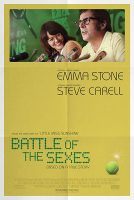 In the wake of the sexual revolution and the rise of the women’s movement, the 1973 tennis match between women’s world champion Billie Jean King (Emma Stone) and ex-men’s-champ and serial hustler Bobby Riggs (Steve Carell) was billed as the BATTLE OF THE SEXES and became one of the most watched televised sports events of all time, reaching 90 million viewers around the world. As the rivalry between King and Riggs kicked into high gear, off-court each was fighting more personal and complex battles. The fiercely private King was not only championing for equality, but also struggling to come to terms with her own sexuality, as her friendship with Marilyn Barnett (Andrea Riseborough) developed. And Riggs, one of the first self-made media-age celebrities, wrestled with his gambling demons, at the expense of his family and wife Priscilla (Elisabeth Shue). Together, Billie and Bobby served up a cultural spectacle that resonated far beyond the tennis court, sparking discussions in bedrooms. KIDS FIRST! Film Critic Willie J. comments, “The directing is swift, well paced and well filmed. Kudos to the cinematographer who really has a wonderful grasp on stillness to promote an essential moment and exerts great uses of soft and hard focus to portray dramatic moments and internalize character feelings.” See his full review below.
Battle of the Sexes
Willie J., KIDS FIRST! Film Critic, age 18
The themes presented in this film are still relevant and have merit. With that said, I want to add that ever since Ibsen wrote “A Doll’s House,” it’s very rare to get a film (or play for that matter) that is charged with the theme of gender equality and presents it in a way that truly resonates. What do I mean? In films that aim to give a message or present an issues, such as when the writer wants to say something about the relevant society, more often than not, the writer portrays those characters in simple categorizations of good and bad. That may work in a superhero film, but in a piece of realism, where character development and relationships are key elements to the storytelling, simple good and bad just won’t do. That’s my issue with this film. The screenplay simplifies a few integral characters too much, in favor of hoisting up its protagonist.
To get this out of the way, the performances are fantastic. Emma Stone and Steve Carell lead the cast well, and the cast doesn’t have a weak link in it. In particular, a lot of credit has to be given to Steve Carell. He took a character that was underwritten and perhaps even misrepresented and makes him sympathetic and someone to root for. Andrea Riseborough also delivers a very affecting performance and really gives us some great scene work with Emma Stone.
The directing is swift, well paced and well filmed. Kudos to the cinematographer who really has a wonderful grasp on stillness to promote an essential moment and exerts great uses of soft and hard focus to portray dramatic moments and internalize character feelings. The editing also deserves a shout out for some wonderful pacing and really effectively switching between the grainy, 70s like cinematography and more clear cinematography.
Now, back to the screenplay. What made and still makes “A Doll’s House” the ultimate gender-equality script is that every character can be sympathized with. We learn more about the human condition and evils of society, rather than placing blame and anger on individual groups. There are only two men that can be rooted for without hesitation and that’s our protagonist’s husband and father. Every other guy is completely unlikable and has no arc, and Steve Carell’s character can be questioned. Carell’s character, who is a vital part of this story, isn’t written very well or thoroughly. It’s always hard to have two protagonists in a film, especially at a reasonable and well paced time. Carell’s character is both an antagonist and protagonist or, at least attempts to be so. Carell’s character opposes Emma Stone’s. It’s a man versus women ordeal and their tennis match is the crisis and climax of the film. But, here’s the issue. Carell’s character is NOT the antagonist. It’s society! So why is Carell’s character’s standing within the realm of the film so questionable? Why doesn’t he get his own arc? Every major character in “A Doll’s House” takes a journey. That’s what makes us empathize with them and come away disliking their society, and not the products of that society. The same would work with this film. But instead, there is a co-protagonist / antagonist that is not written for people to care about or even empathize with. He gets no arc, no change. He’s unaffected. He may as well have been a smaller part.
Why is this an issue? Because Emma Stone’s character is a catalyst. She’s the driving force and vehicle used within the film to represent the affects of an unjust era and to showcase the positive effects that a change in this society would have. Unfortunately, because Carell’s character and the real antagonists (the sexists who sit atop the societal ladder) don’t change, because we only see them as unlikable, this story turns into something simple and ultimately unfulfilling. Stone’s character merely wins the battle within the film and we come away knowing that and are momentarily happy. However, that soon goes away, which makes this entertaining dramedy perhaps a little forgettable. Had the writing been more substantial and caring to all its characters, and forgiving to all its characters and condemned society instead, we’d come away with a more profound understanding of where issues lie and are issued from. That’s a memorable film. I suppose the cinematic world is still chasing Ibsen.
I give this film 3 out of 5 stars for its entertainment value and performances and recommend it for ages 13 to 18. It is playing in theaters now so go check it out.
 I enjoyed watching the drama/biography Rebel in the Rye, directed by Danny Small which examines the life of J.D. Salinger, best known for his novel, Catcher in the Rye. This book was very controversial when it first came out and, although I didn’t read it at the time, this film has inspired me to do so. More on that is yet to come!
 Babies, Puppies, Children, Humor, and Villains all have one thing in common – they all make a terrific film! The animation is colorful and has lots of details. The storyline is cute, silly, original and fun for the whole family.
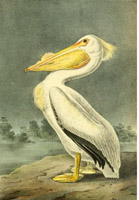
 John James Audubon was one of the most remarkable men of early America. A contemporary of Lewis & Clark and Davey Crockett, he explored the American frontier in search of “the feathered tribes” he loved and studied. A self-taught artist and ornithologist, he left a legacy of art and science that made him famous in his lifetime and endures to this day. His portrait hangs in the White House, his statue stands over the entrance to the American Museum of Natural History, and his name was adopted by the nation’s first conservation organization. The program, filmed in locations where Audubon painted, brings to life his timeless paintings with dazzling footage of the living birds he immortalized and celebrates visually the natural world he described in his writings. Interviews reveal the man, explore his art and put his groundbreaking work in modern perspective. KIDS FIRST! Juror, Eli B. comments, “Audubon is such a great film about the life and contributions of John James Audubon. His struggle and journey as a Haitian immigrant to the United States of America is inspiring. The paintings he created forever immortalized the subjects (some of which are now extinct) and the research he did ultimately led to our nation’s first conservation organization.” See her full review below.
 examples of his beautiful works of art, maps charting his journey from Haiti to America and excerpts from the journals he kept throughout his life. This DVD offers a great way to teach anyone about John James Audubon. The art and story telling is not only beautiful and interesting, but important scientifically and in regards to American history.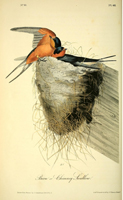
 Sometimes things are not always what they seem, especially in the small suburban town where the Carpenter family lives. Single suburban mother Susan Carpenter works as a waitress at a diner, alongside feisty family friend Sheila. Her younger son Peter is a playful 8-year-old. Taking care of everyone and everything in his own unique way is Susan’s older son Henry, age 11. Protector to his adoring younger brother and tireless supporter of his often self-doubting mother – and, through investments, of the family as a whole – Henry blazes through the days like a comet. Susan discovers that the family next door, which includes Henry’s kind classmate Christina, has a dangerous secret – and that Henry has devised a surprising plan to help.
 As his brainstormed rescue plan for Christina takes shape in thrilling ways, Susan finds herself at the center of it. KIDS FIRST! Film Critic Willie J. comments, “However, I was pleasantly surprised by this under-the-radar film and am sure general audiences will as well. The Book of Henry is an emotionally affecting film with a few fine messages about parenthood and altruism.” See his full review below.
 interesting premise. However, I was pleasantly surprised by this under-the-radar film and am sure general audiences will as well. The Book of Henry is an emotionally affecting film with a few fine messages about parenthood and altruism.
 palpable. It’s reminiscent of the concert scene in The Man Who Knew Too Much. It all comes to a satisfying ending that we all knew was coming and yet, isn’t any less smile inducing.

 is a star athlete. Playing football like a professional, Layfield receives multiple college scholarships and is ready to begin a new chapter in his life. But, he has a big secret: he is battling a mental illness. Over a two year period, Layfield tries to keep his illness to himself and transforms from a fantastic football player to a prophet who believes he can save the world.
  more intriguing. Steve Ellis’ portrayal of Zinte, Holden’s best friend, is humorous. Zinte truly cares about Holden and it is evident through their five year friendship. Ellis characterizes Zinte as comical, joking around with him to cheer him up. But, he is unaware of Holden’s issue. These lead actors left me on the edge of my seat for the entire film.
 situation and the camera shifts towards his point of view. For example, Holden tackles another team player on the football field before the game begins. The camera cuts to Holden’s thoughts, displaying a visual of what is going on in his brain. I enjoyed how Holden narrates his thoughts when this occurs, because I could empathize more with him.
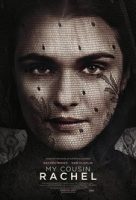 A young Englishman plots revenge against his mysterious, beautiful cousin, believing that she murdered his guardian. But his feelings become complicated as he finds himself falling under the beguiling spell of her charms. KIDS FIRST! Juror Juanita L. comments, “The detail and beauty of the 19th century in the settings of the house and grounds captivated me. The suspense and mystery of finding out just who Rachel (Rachel Weisz) is and what will happen with Phillip (Sam Claflin) kept me on edge of my seat.” See her full review below.
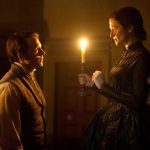 and grounds captivated me. The suspense and mystery of finding out just who Rachel (Rachel Weisz) is and what will happen with Phillip (Sam Claflin) kept me on edge of my seat. Expect candles, beds with draperies, bonnets, bumpy wagon rides and scything — as well as a modern-minded female character who may or may not be up to no good in pursuit of money.
 My Cousin Rachel, adapted from a book set in the 19th Century and written in 1951 by Daphne du Maurier, is a combination of suspense, passion and some psychological glimpses of men and women in often intriguing and obsessive relationships. The story is about a rather naïve young bachelor who struggles to decide if his deceased guardian’s charming widow is the woman of his dreams or a cold-blooded killer and gold-digger seeking an inheritance. Among those disturbed by Phillip’s sudden obsession with Rachel is Louise (Holliday Grainger), his confidante since childhood who has long harbored her own unrequited crush on him.
 I was catapulted back in time watching the classic rockumentary Monterey Pop. In celebration of its 50th Anniversary, D. A. Pennebaker, the original director supervised, restored and re-mastered this amazing documentary with vibrant color and sound. Ushering in the 1967 Summer of Love, he captures the beginning of a new era of rock n’ roll music as well as a counterculture life style. This was just the beginning of the big concert formats.
 Redding along with a diverse cast of more known artists at that time – Simon and Garfunkel, The Mamas & The Papas, The Who, Jefferson Airplane, Hugh Masekela and Ravi Shankar.
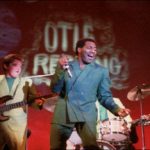 Festival of 500,000). We must remember that this concert set a precedence for what was to come, including other charitable music events such as Live Aid and Farm Aid.
 an audience in amazement, shock and awe! Janis Joplin’s performance is mesmerizing in both her stage presence and her voice. Mama Cass’s reaction to her performance is captured in posterity and lives on. This was just the beginning of my concert going years and I enjoyed reminiscing and singing long with classic songs like “Feeling Groovy” by Simon and
  Garfunkel and “Today” by Jefferson Airplane among others.
 featuring Ravi Shankar, who introduced us to the sitar, the tabla and Indian ragas. It was in this close that the director truly captured the audience’s reaction in a meditative state to a different style of music. As I looked at the audience, I related to the counter-culture clothing, hats and painted flower-power faces. The standing ovation of appreciation at the conclusion is quite remarkable and inspiring.
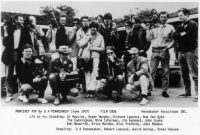 l as the generations that followed from age 8 to 18 and beyond. This film allows you to witness and enjoy a remarkable and classic time in music and the beginning of a new consciousness. It opens in New York on June 14, in Los Angeles on June 15 and across the country on the weekend of June 16, alongside a new celebration of the festival in Monterey, California!
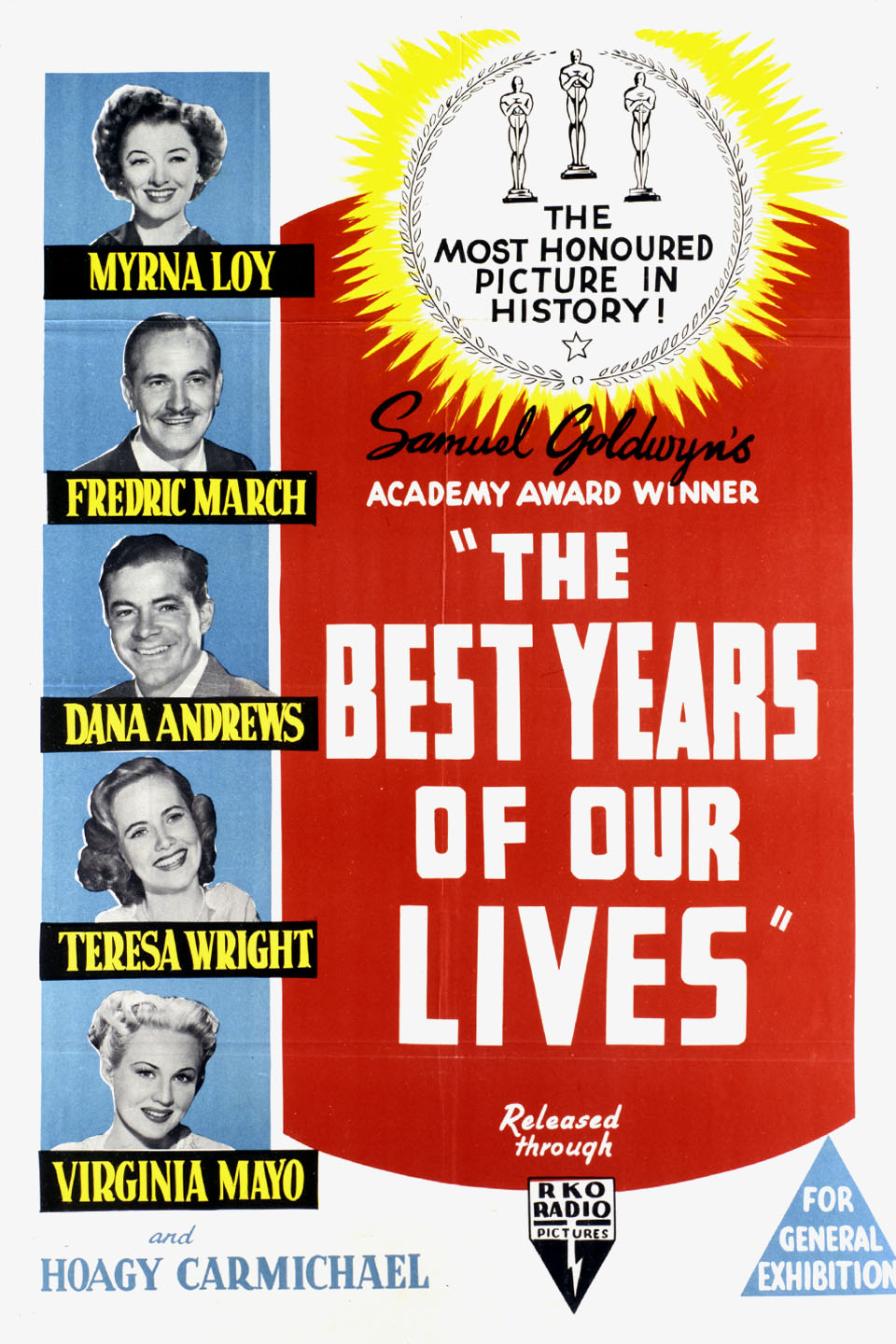 Last month, while visiting a college, I came upon a film on TCM called The Best Years Of Our Lives. It’s a post WWII film about the difficulties soldiers faced in acclimating back into society after being in combat. Directed by William Wyler, it was released in 1946 and stars Myrna Loy, Fredric March and Dana Andrews. While watching the film, I had an epiphany that older movies flow much better than many current films. There isn’t any rush to change scenes, which allows the viewer to better comprehend what they’re watching. The pace also gives the actors and directors more breadth. I was really able to appreciate the humor of Myrna Loy.
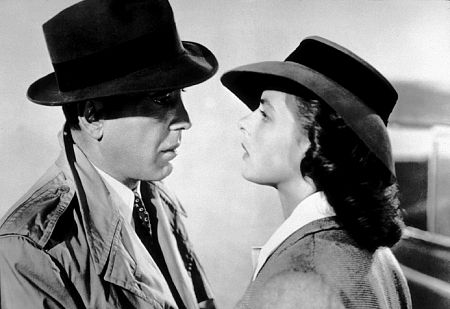 d in 1942, it is directed by Michael Curtiz and stars Humphrey Bogart, Ingrid Bergman and Paul Henreid. Casablanca is a WWII film taking place in French Morocco. What I really love about this film and other old movies is that they have amazing close-ups, which allow the viewer to appreciate the beauty and uniqueness of the stars’ faces. In this film, they show close-ups of Humphrey Bogart and Ingrid Bergman that are heavenly. Casablanca reveals the ambiguous complexity of right and wrong, unlike most movies of today. It
  shows the flat out truth of life, that there are no easy answers.
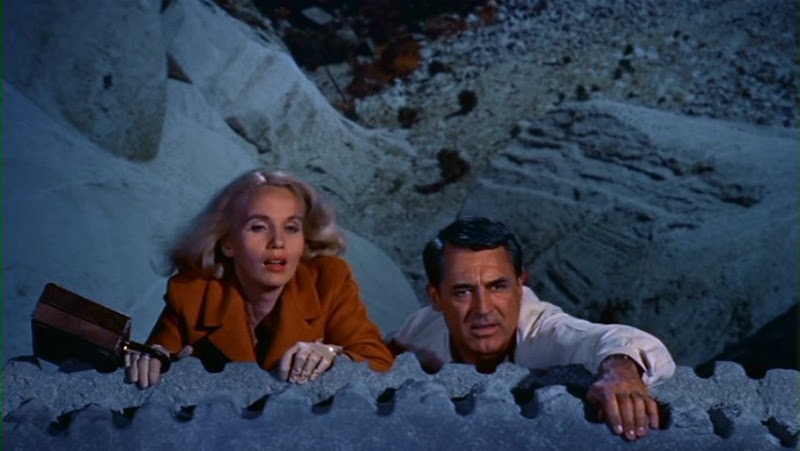
 any special effects or CGI. The iconic crop duster and Mount Rushmore scenes are done on location. This creates a real sense of verisimilitude, whereby the viewer feels as if it’s happening to them.
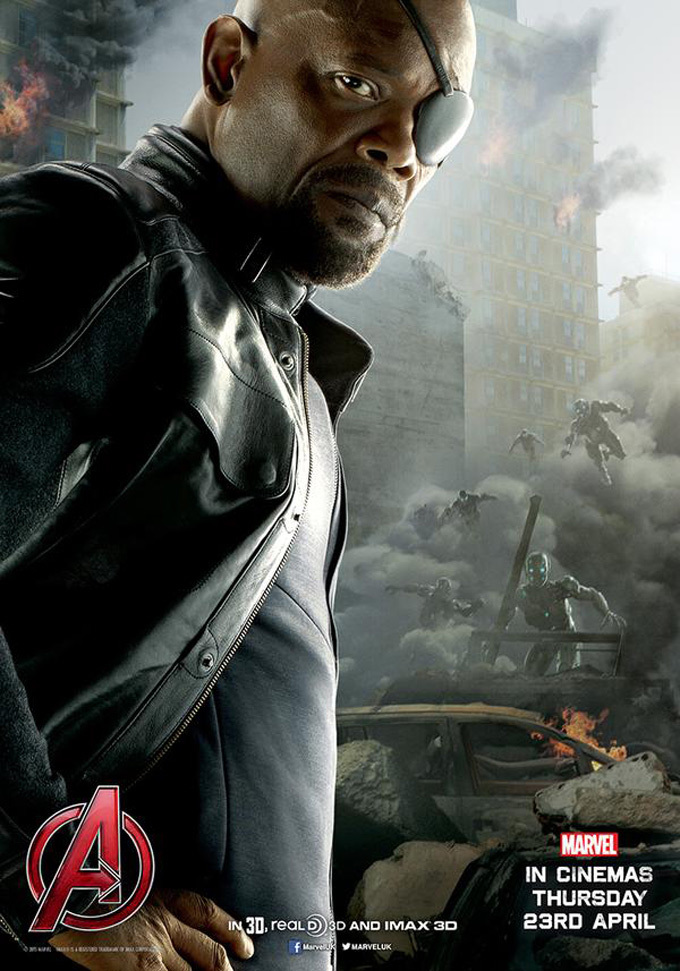 Samuel L. Jackson recently spoke about how British black actors have recently been heavily cast in roles that he feels would have benefited more had they been filled by American black actors. He was referring to actors such as David Oyelowo, Chiwetel Ejiofor, Naomie Harris and Daniel Kaluuya. Jackson stated
  that while these actors are doing fine jobs, the roles of Martin Luther King or Chris Washington could have been more judiciously played by American black actor. Let’s evaluate this.
 Denzel Washington and Samuel L. Jackson are noted thespians. They’ve been trained and have experience on the stage and that translates in their screen performances. The problem is that, they’re beginning to be a part of a minority. The likes of Ejiofor and Oyelowo are trained in England, a very theatrical country. Film is still secondary to theater there and so, actors in Britain get classical theatrical training. For the most part, thespians still garner more respect than film actors (excluding Jack Nicholson). Having theater experience is essential to be respected as an actor and Americans increasingly ignoring that. They start in film and never venture into theater until after they’re
  established such as Jake Gyllenhaal or Leonardo DiCaprio.
 should keep hiring black actors from overseas and not support more American black actors. All I can say is: it’s a business. A very cutthroat business, that’s all about survival of the fittest. If a group of actors comes into Hollywood better trained, does that mean another group of actors should complain about their roles being taken away? No. It means they should
  sharpen their skills and advance their training.


