Words or Pictures, You Choose by Keefer Blakeslee
Monday, September 22nd, 2014 I recently saw, The Giver, a movie based on the award-winning novel by Lois Lowry. I read reviews from critics and, for the most part, they were not pleased with the film. Naturally, I had to see if their comments were true. I went to see the movie without having read the book. This allowed me to view it with an open mind. When the credits rolled and the lights turned back on, I was impressed. I felt it was an entertaining movie with phenomenal acting and a thought-provoking story.
My mom turned to me saying, “What do you think the critics found wrong with it?” Now again, this is coming from viewers who have not, for the most part, read the book. The consensus from Rotten Tomato was, “Phillip Noyce directs The Giver with visual grace, but the movie does not dig deep enough into the classic source material’s thought-provoking ideas.” I’m, of course, leading up to a controversial question: What is better, the book or the movie?
Now before you say, “Of course the book is better,” let me explain. First of all, I’m the type of person who looks at both sides of the argument. What is a book? Well a book tells a story with characters and conflict, that’s a basic definition. If you’re an avid reader you can get lost in a good book because it transports you into new worlds, lives, ways of thinking, new information and more. It becomes the reader’s job to imagine the visuals unless it’s a picture book. Take for example, Oliver Twist. Before moving pictures, there was only Charles Dickens’ words to tell the story. Dickens is an author who gives great details about the surroundings of his beloved characters. For me, I like to visualize the workhouses or Fagin with his sticky fingers.
A movie is or, is suppose to be, able to accomplish the same goal in telling a story. In this form it’s the writers, directors and actors job to provide the visuals. This is where most book lovers say, “They left this scene out of the movie” or ”They did not include my favorite character.” These are decisions that a screen writer or director must make to please the audience and more importantly the fans, while still trying to make a movie. A movie is supposed to entertain us. If they don’t get every scene from the book in the movie, that’s probably to avoid making it a 5-hour movie. Just think if Tom Hooper did every scene in the book, Les Miserable which is at least 613 pages. Alfred Hitchcock was known to say, “The length of a film should be directly related to the endurance of the human bladder.” Look at it this way, in the film Hunger Games. If you read the books, were you not ecstatic to see Katniss Everdeen leap off the pages? Look at what a movie provides, not at what it doesn’t.
Let’s get into my territory, comic books. I know they are graphic novels and provide visuals for the fans who read them, but it’s something I can relate to more. I remember when I saw Iron Man 3 and I knew the Mandarin was the villain. Like most fans I was extremely excited. In the trailer he was played by Ben Kingsley. He was threatening. He had this big end-of-the-world speech. It was perfect! Then, when I saw him in the movie, as a fan, he was disappointing. Of all the directions the director or writer could have gone with this character, they choose this. I will not give anything away but, I was shocked. However, as a film choice it was hilarious and Ben Kingsley does a fantastic job. I laughed so hard but, in the back of my mind the comic book fan side of me was screaming in anger.
I bring this up because I can relate to people who find this movie was not always true to the original source material and it was frustrating. I loved the movie, but it was that one scene that killed it or me. Then I asked myself, “Did it accomplish its goal as a movie? And, I had to answer, “Yes!”
Now, back to the original question: What is better, the book or the movie? I think they are two different forms of media. Both can, and are, beautiful forms of art. They both have the same goal, but they have different forms of meeting it. I’m a youth who prefers movies but that doesn’t mean I disregard books. In fact I loved the movie, The Giver so much that I was inspired to read the book. Not to see what’s better but to look at the story from another imagination. Of course the book goes in more depth but that’s because it’s limitless. Authors can write as many pages as they want and the audience that reads it can put it down and continue reading later. If you want to fully enjoy movies you sit down and watch it all the way through. It all depends on which you prefer. Here’s a visual: Look at the book as a lobster dinner and the movie as a crab dinner, which one are you going to choose? Side by side, you may pick lobster but that does not make the crab dinner less appetizing. In the end, both media mean something.

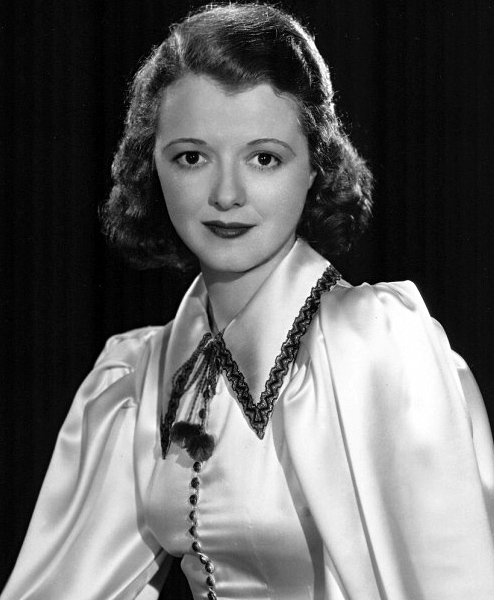
 It’s no secret that the film industry has come a long way from where it started. From the first motion picture created by
  What is it like to see the Earth and its 7 billion humans from 300 miles away? That is probably what 7 billion humans think when they think about space! A dangerous void to which we, humans, travel only for scientific reasons. Recently, NASA ended the space shuttle program is going back to the old capsule method of exploration. I honestly think that soon, travel across the world will be in less than 10 hours. People will get on a plane, the plane will travel over 100 miles above the earth’s surface and then land back on the other side of the world.
 Alice Guy-Blaché set the starting point for female film directors. She represents the first female director in the motion picture industry. Alice Ida Antoinette Guy (maiden name) entered this world on July first 1872 in Paris, France, to parents Mariette and Emile Guy. Following completion of school at Sacred Heart Convent, she accompanied Leon Gaumont as his secretary at a still photography company. After seeing some footage shot by the Lumiere brothers in a private screening, Alice asked Gaumont if she could use his camera to film a story. She directed and produced her first film, The Cabbage Fairy (La Fée Aux Choux) in 1896 at the young age of twenty-three.


