Marshall – 1940s Legal thriller Based on a True Story about Thurgood Marshall
October 19th, 2017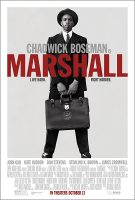 Young Thurgood Marshall faces one of his greatest challenges while working as a lawyer for the NAACP. Marshall travels to conservative Connecticut when wealthy socialite Eleanor Strubing accuses black chauffeur Joseph Spell of sexual assault and attempted murder. He soon teams up with Sam Friedman, a local Jewish lawyer who’s never handled a criminal case. Together, the two men build a defense while contending with racist and anti-Semitic views from those who deem Spell to be guilty. KIDS FIRST! Reviewer Juanita L. comments, “For me, this film brought back my experience as a young person who lived in Virginia and experienced the separate but equal in my education.” See her full review below.
Marshall
By Juanita L., KIDS FIRST! Adult Juror
I enjoyed watching and experiencing Marshall. The 1940s legal thriller is the story about a dozen years before young Thurgood Marshall challenged segregation’s separate but equal premise in Brown v. Board of Education. For me, this film brought back my experience as a young person who lived in Virginia and experienced the separate but equal in my education.
Chadwick Boseman captures the essence of Thurgood Marshall’s spirit. He brings the confidence, intelligence, cockiness as well as the charm and humor of Thurgood. It is an exciting performance from Hollywood’s go-to-guy for playing important Black Americans.
There are many parts that I enjoyed. When Marshall meets Sam Friedman (Josh Gad), we see his cockiness from the moment he steps off the train in Bridgeport, CT., ordering his white co-counsel, Sam Friedman, to carry his bags. Another enjoyable scene is the Harlem night club with Marshall and his friends, Langston Hughes and Zora Neale Hurston.
The cinematography is outstanding. One scene when Marshall and Friedman are in the men’s room, it looks as if they are in the mirror together, however you can see them individually. With its excellent role models and strong messages about courage, teamwork and tolerance, this film is a great movie for teens and families. You can expect to see fist fights and beatings, with bloody wounds and bruises. There’s also a flashback to a suggested rape, with violent acts against a woman. There is a mild sex scene which includes kissing, however there is no nudity. Language includes several uses of the “N” word as well as “kike.” Characters drink alcohol and there is background smoking.
This film celebrates standing up and courageously risking your own safety to fight against popular opinion and against difficult odds. The movie is about tolerance in a way that’s more matter-of-fact than self-righteous. Characters work together in an effective way.
I recommend this film for ages 14 to 18 as well as adults and give it 5 out of 5 stars. Marshall opens Friday, October 13, 2017 in theaters across the country. Be entertained while learning about American history and a very powerful and influential man.
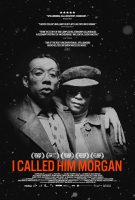 An exploration of the relationship between jazz trumpeter Lee Morgan and his common-law wife Helen, who was implicated in his murder in 1972. KIDS FIRST! Juror, Terry S. comments, “This haunting documentary about the life of a great jazz trumpeter Lee Morgan and his wife Helen is one I will not soon forget. ” See her full review below.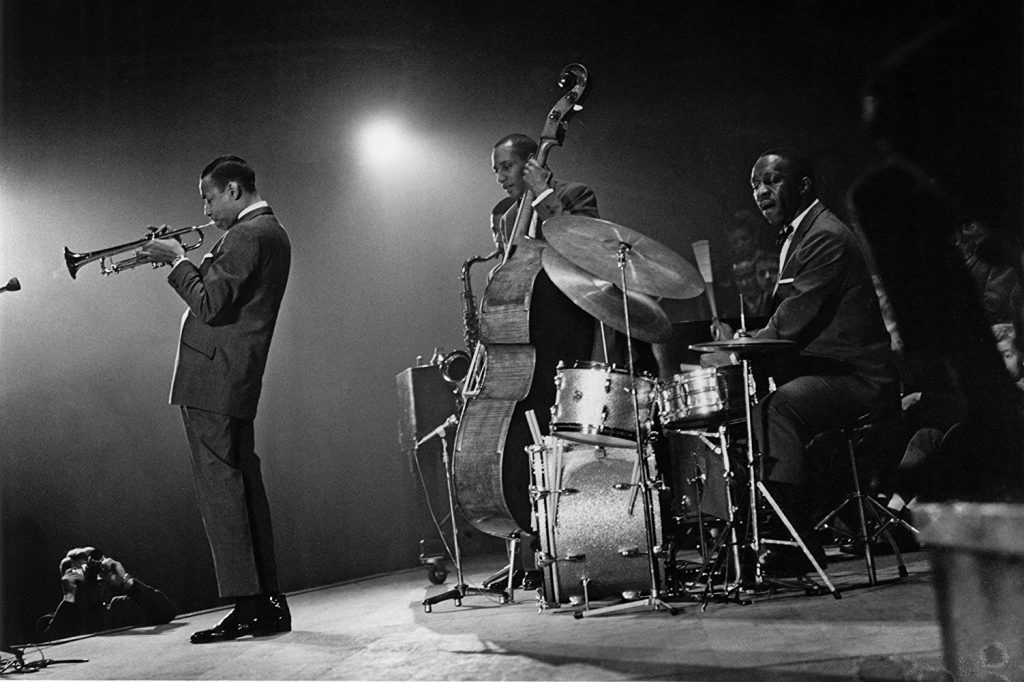
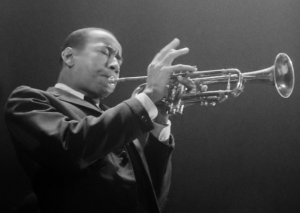 Lee had years of success playing not only clubs in the East but also on the West Coast. Some of my favorite parts of the documentary include footage on a TV show called “Soul”, where he dedicates a piece to the activist Angela Davis entitled “Angela”, and another TV show hosted by Steve Allen, a talk show host popular at the time. The other favorite part was with the jazz mobile workshop where he worked with young people on musical arrangements and gave them a chance to play and learn from him.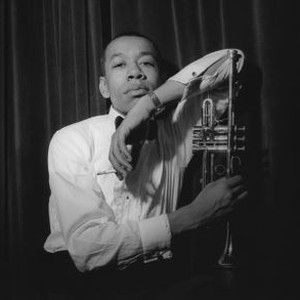
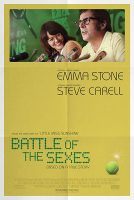 In the wake of the sexual revolution and the rise of the women’s movement, the 1973 tennis match between women’s world champion
  I enjoyed watching the drama/biography Rebel in the Rye, directed by Danny Small which examines the life of J.D. Salinger, best known for his novel, Catcher in the Rye. This book was very controversial when it first came out and, although I didn’t read it at the time, this film has inspired me to do so. More on that is yet to come!
 Babies, Puppies, Children, Humor, and Villains all have one thing in common – they all make a terrific film! The animation is colorful and has lots of details. The storyline is cute, silly, original and fun for the whole family.
 Camp Cool Kids
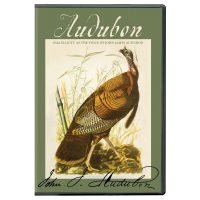 John James Audubon was one of the most remarkable men of early America. A contemporary of Lewis & Clark and Davey Crockett, he explored the American frontier in search of “the feathered tribes” he loved and studied. A self-taught artist and ornithologist, he left a legacy of art and science that made him famous in his lifetime and endures to this day. His portrait hangs in the White House, his statue stands over the entrance to the American Museum of Natural History, and his name was adopted by the nation’s first conservation organization. The program, filmed in locations where Audubon painted, brings to life his timeless paintings with dazzling footage of the living birds he immortalized and celebrates visually the natural world he described in his writings. Interviews reveal the man, explore his art and put his groundbreaking work in modern perspective. KIDS FIRST! Juror, Eli B. comments, “Audubon is such a great film about the life and contributions of John James Audubon. His struggle and journey as a Haitian immigrant to the United States of America is inspiring. The paintings he created forever immortalized the subjects (some of which are now extinct) and the research he did ultimately led to our nation’s first conservation organization.” See her full review below.
 examples of his beautiful works of art, maps charting his journey from Haiti to America and excerpts from the journals he kept throughout his life. This DVD offers a great way to teach anyone about John James Audubon. The art and story telling is not only beautiful and interesting, but important scientifically and in regards to American history.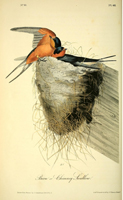

 The Resilient Heart
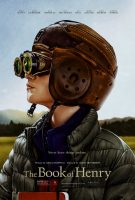 Sometimes things are not always what they seem, especially in the small suburban town where the Carpenter family lives. Single suburban mother Susan Carpenter works as a waitress at a diner, alongside feisty family friend Sheila. Her younger son Peter is a playful 8-year-old. Taking care of everyone and everything in his own unique way is Susan’s older son Henry, age 11. Protector to his adoring younger brother and tireless supporter of his often self-doubting mother – and, through investments, of the family as a whole – Henry blazes through the days like a comet. Susan discovers that the family next door, which includes Henry’s kind classmate Christina, has a dangerous secret – and that Henry has devised a surprising plan to help.
 As his brainstormed rescue plan for Christina takes shape in thrilling ways, Susan finds herself at the center of it. KIDS FIRST! Film Critic Willie J. comments, “However, I was pleasantly surprised by this under-the-radar film and am sure general audiences will as well. The Book of Henry is an emotionally affecting film with a few fine messages about parenthood and altruism.” See his full review below.
 interesting premise. However, I was pleasantly surprised by this under-the-radar film and am sure general audiences will as well. The Book of Henry is an emotionally affecting film with a few fine messages about parenthood and altruism.
 palpable. It’s reminiscent of the concert scene in The Man Who Knew Too Much. It all comes to a satisfying ending that we all knew was coming and yet, isn’t any less smile inducing.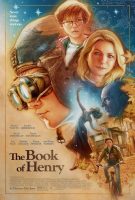
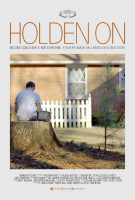
 is a star athlete. Playing football like a professional, Layfield receives multiple college scholarships and is ready to begin a new chapter in his life. But, he has a big secret: he is battling a mental illness. Over a two year period, Layfield tries to keep his illness to himself and transforms from a fantastic football player to a prophet who believes he can save the world.
  more intriguing. Steve Ellis’ portrayal of Zinte, Holden’s best friend, is humorous. Zinte truly cares about Holden and it is evident through their five year friendship. Ellis characterizes Zinte as comical, joking around with him to cheer him up. But, he is unaware of Holden’s issue. These lead actors left me on the edge of my seat for the entire film.
 situation and the camera shifts towards his point of view. For example, Holden tackles another team player on the football field before the game begins. The camera cuts to Holden’s thoughts, displaying a visual of what is going on in his brain. I enjoyed how Holden narrates his thoughts when this occurs, because I could empathize more with him.