As Women’s History Month 2017 Comes To An End By Brianna Hope Beaton
April 2nd, 2017 I believe that all people are important for various reasons. However, since March is Women’s History Month and International Women’s Day was on March 8th, the importance of woman is near and dear to my heart. Instead of focusing on one person or even one group of people, I want to focus on the historical progression of woman’s rights in America.
In 1769, women had limited property rights. The colonies declared that women could not own property in their own name or keep any of their own earnings. Years later, in 1848, the first woman’s rights convention was held. Hundreds of activists gathered in New York, to work out a plan to obtain women’s suffrage nationwide. Well-known participants signed the Declaration of Sentiments and Resolutions, modeled after the Declaration of Independence. It called for equal treatment of both genders under the law and voting rights for women.
In 1869, the racial equality problem pared with the arguments and disagreements over Amendments 13 to 15, dividing into two woman’s organizations – the National Woman Suffrage Association and the American Woman Suffrage Association. The two came back together in 1890 to form the National American Women’s Suffrage Association. In the same year, the territory of Wyoming passed the first law that give women, over the age of 21, the right to vote. After Wyoming joined the Union, it established itself as the first state to allow a woman the right to vote. In 1872, Congress required federal equal pay for equal work. However, this law was unfortunately not extended to the majority of female employees working for private companies until the adoption of the Equal Pay Act in 1963. Also in 1872, Victoria Woodhull claimed the title for being the first woman to be nominated for president, but ironically no woman was allowed to vote. Woman are reminded of this fact when, later in the year, Susan B. Anthony was arrested for trying to vote and was convicted of “unlawful voting.”
About 30 years later, in 1903, The Women’s Trade Union League was established, unifying women that worked and promoting better pay and working conditions. Nearly twenty years later, in 1920, the 19th amendment was ratified and women were finally able to vote!!!!! In 1963, the Equal Pay act became a federal law for all woman. In 1967, civil rights protections were extended to women. President Lyndon B. Johnson issued Executive Order 11375, which expanded the affirmative action policies of 1965 to cover discrimination based on sex.
A few years later, in 1972, Congress passed, Title IX of the Education Amendments, which required schools receiving federal funds to offer equal admission to educational programs for all genders. This law is credited with the fiery growth of sports for women and girls at the high school, collegiate and professional levels. The law took effect in 1976 after withstanding repeated court challenges. In 1973, the Supreme Court established the abortion right. In and after Roe v. Wade, the Supreme Court determined that a woman has the constitutional right to choose whether to have an abortion or carry her pregnancy to term. In the same year, the women-only branches of the U.S. Military eliminated. Women became intergraded into all branches of the U.S Military. Five years after that, in 1978, employment discrimination against pregnant women was banned. The Pregnancy Discrimination Act ensures that employment discrimination on account of pregnancy is treated as unlawful sex-based discrimination. And last but not least, in 2009 the Lilly Ledbetter Fair Pay Act was signed into law. The new law changed Title VII of the Civil Rights Act of 1964, which stated that discrimination complaints must be brought within 180 days of the discriminatory act.
As you can see, woman’s rights have come a long way. It’s good to know and understand the trials and tribulations that those who came before you had to go through for you in order to do the things that you, as a woman can do today. I hope you enjoyed your International Woman’s Month and celebrated how far we have come.
“I do not wish them [women] to have power over men; but over themselves.”
Mary Wollstonecraft, A Vindication of the Rights of Woman
 The first film that turned me onto anime was Fullmetal Alchemist. The intense, adventurous action of Edward and Alphonse Elric captivated me. I find the entire idea of alchemy quite fascinating. The first time I watched this film, I was unaware of the elaborate history of alchemy. I watched it again when I was a bit older and understood it and enjoyed it even more. I was highly bewitched by the dark background of Edward and Alphonse and what Edward sacrificed for his brother. After watching this film, both the original and the Brotherhood version a total of six times, I was finally prepared to dig deeper into the enslaving ways of anime.
 portray them in different ways. In Fullmetal Alchemist they are the central villains that the Elricks must overcome to accomplish their dire objective. In Seven Deadly Sins they are portrayed as the preeminent heroes of the story who are sadly misunderstood by the public as monsters. After watching this series, I went onto Hunter X Hunter which is where my binding animobsession really began.
 this show I stayed in my room, binge watching it, for two and a half full days until I finished it. This is, by far, the most emotionally intense and adventurous show I have ever seen. The main characters are very relatable and remind me of my own childhood. It is about a young boy named Gon whose father abandoned him in order to take the Hunter Exam. Gon is taken in by one of his father’s childhood friends and raised by her until he decides to take the Hunter Exam, in order to search for his father. The rest of the show is Gon’s journey searching for his father, who doesn’t exactly want to see him. He feels guilty for leaving his son many years ago and makes it as difficult as possible for Gon to find him. After finally getting off my deep addiction to this show, I turned to Sword Art Online to quench my anime thirst.
 Sword Art Online is highly intense and thrilling. I ended up getting sucked into it and watched it seven times. This show is about a teenager named Kirito who luckily gets his hands on a highly anticipated game, Sword Art Online. Sword Art Online is a action packed MMORPG (Massively multiplayer online role-playing games) that allows you to dive inside the game when using nerve gear. Once all the players are inside the game, it gets corrupted by the creator and everyone is trapped inside, not being able to log out, until the players beat the 100th floor. Did I forget to mention that if any person dies inside the game, they also die in real life. This anime also has the best intensely beautiful soundtrack I have ever heard, I even listen to it when I am not watching the anime.
 In my past blogs, I often look at how film is changing due to new technologies and changing mediums. This week, I don’t want to talk about how film is changing, but how film changes the world. Despite what many think, it isn’t just documentaries that can open up people’s eyes on current issues that need to be talked about. Historically, there are many films that completely changed the world thanks to their stories, messages and legendary quality.
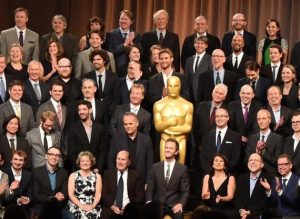

 I was fascinated with all the catchy, get me up dance numbers in La La Land. I thought it captured the essence of the beginning of a relationship, when two people first fall in love. Lion is so emotionally harrowing, but captivating at the same time. Dev Patel portrays grown up Saroo so well and has justly been nominated for Best Supporting Actor for his role in it. Manchester by the Sea is a spectacular, but serious, family film that is very relatable because of its teen protagonist. This film is the flat-out truth about how horrible or exciting life can really be. It doesn’t pull any punches. It just tells an honest story about a dysfunctional family. 20th Century Women is a hip, pop and lock sort of punk rock movie that young teens will love. I am very surprised that it was not nominated for Best Picture.