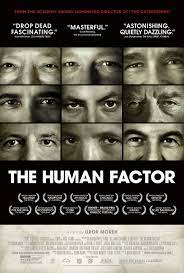
With unprecedented access to the foremost American negotiators, THE HUMAN FACTOR is the behind-the-scenes story from the last 25 years, of how the United States came within reach of pulling off the impossible – securing peace between Israel and its neighbors. Today, the need to learn from past mistakes couldn’t be more urgent.
KIDS FIRST! Film Critic Ashleigh C. comments, “The Human Factor documentary is very informative and will be loved by those that are curious about the negotiators of the Israeli and Palestinian conflict during the Clinton Administration, and their efforts to bring compromise and peace. The one-on-one interview setting makes it easier to understand and grasp basic questions of this foreign political situation.” See her full review below.
The Human Factor By Ashleigh C., KIDS FIRST! Film Critic, 17
The Human Factor documentary is very informative and will be loved by those that are curious about the negotiators of the Israeli and Palestinian conflict during the Clinton Administration, and their efforts to bring compromise and peace. The one-on-one interview setting makes it easier to understand and grasp basic questions of this foreign political situation. And while the film does provide some context in the beginning, you may want to do a little research on the conflict before watching.
I had an unexpectedly emotional reaction to this documentary. Director Dror Moreh cleverly sets a specific tone that grabs the viewer, and then reveals history in a brilliant way. My favorite parts are with the negotiators and their dialogue about their personal firsthand experience being a part of this crucial stage in history. While it is a foreign conflict, we are shown it from the United States’ perspective.
I love the music throughout this film, thanks to composer Eugene Levitas. While a lot of scenes were usually serious due to the political dialogue, some scenes added unusually whimsical music to set a certain mood.
The message of this film is really important to understand, especially in the current political climate of the United States. “People just like to demonize the other side. All that is out is the human side, the animosity for each other. And unless (we) are planning on accepting the other side, there is zero hope for a solution.” The challenge of any political conflict is building bridges and crushing barriers, and this conflict is no exception. The Human Factor does contain violence, gore, and scenes that depict warfare.
I give The Human Factor 4 out of 5 stars and recommend it to ages 13 to 18 as well as adults. You can watch The Human Factor in theatres nationwide on May 7, 2021.
Share this page on:
Posted in Film Critics Blog | Comments Off on The Human Factor * Israeli and Palestinian Conflict Negotiations During the Clinton Administration
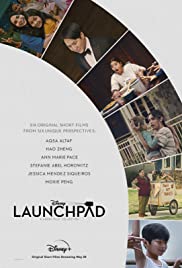
Launchpad is a collection of six short films. Six filmmakers from underrepresented backgrounds were selected and provided with the opportunity to share their perspectives and creative visions that will show audiences what it means to be seen. KIDS FIRST! Film Critic Kyla C. comments, “Launchpad is an emotional and uplifting collection of Disney short films that are great for teens and adults. Every one of the six movies features excellent acting, impressive cinematography, great special effects and storylines with meaningful themes.” See her full review below.
Launchpad By Kyla C, KIDS FIRST! Film Critic, Age 11
Launchpad is an emotional and uplifting collection of Disney short films that are great for teens and adults. Every one of the six movies features excellent acting, impressive cinematography, great special effects and storylines with meaningful themes.
Launchpad includes six different shorts, each with its own unique plot. American Eid and The Last of the Chupacabras are both centered around religion; American Eid is about a young girl finding out she has to go to school on the Muslim holiday, Eid. The Last of the Chupacabras is about a lone Mexican-American trying to keep her culture alive. Growing Fangs is a fantasy about a half-human/half-vampire trying to hide her identity from both worlds. Let’s Be Tigers is about a young girl, Avalon (Otmara Marrero) trying to process the loss of her mother while she is babysitting for a 4-year-old. Dinner Is Served follows a Chinese student trying out for the top position at a fancy restaurant. The Little Prince(ss) is a story about a young boy who loves ballet and whose best friend’s dad comes to talk to his parents about his “girlish behavior.”
With emotional and deep storylines, these short films need great acting to convey the strong messages of the films. These actors deliver. Every character is portrayed by a passionate actor that deeply understands their character and performs with passion. Even for films with no dialogue, you can understand what they are thinking and feeling. Otmara Marrero who plays Avalon in Let’s Be Tigers, delivers an unforgettable performance as such a sorrowful character. The change as she plays with Noah (Dash McCloud) is visible as the film develops. In American Eid, Jenna Qureshi, who plays Ameena’s older sister, Zainab, also delivers a stunning performance, making her teenage, trying-to-be-cool character relatable in every way. The cinematography is equally excellent. The special effects in the fantasy films are wonderful, particularly in Growing Fangs with its vampire effects. Magic is the main component in this one, but there are other effects as well. The stories are all well-written. Some of the shorts are heart-breaking and emotional, while others are more uplifting and creative. There’s a variety of wonderful ideas spread throughout.
These shorts have many themes, some overlapping others. A central point for all of them, is to recognize other people for what they are, not for how they appear.
I give Launchpad 4 out of 5 stars and recommend it for ages 12 to 18 plus adults. Launchpad can be viewed on Disney Plus beginning May 28, 2021.
Share this page on:
Posted in Film Critics Blog | Comments Off on Launchpad * Emotional And Uplifting Collection – Great For Teens And Adults
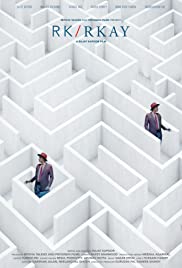
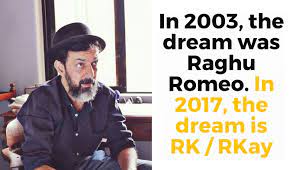
RK is a filmmaker, making a new film, in which he also plays the lead character of Mahboob. Its a quaint film, like a tribute to the cinema of the sixties. People close to him are not really sure why RK wants to make this film.. Edit begins and RK has a sinking feeling that this film is not going to come together, that this time he has really screwed up. His nightmares warn him of an impending disaster. Sure enough, one afternoon RK gets a call from the edit room- something terrible has happened. Mahboob has run away, run out of the film. Nobody can really understand why would he leave, where would he go. But he is not there anymore in the rushes- missing from the film negative as well. The fact is Mahboob was running away from his killers, and somehow he left the film and arrived in our world. RK finds him, brings him home- but Mahboob has no idea where he is from, or that he is any different from people around him. Slowly, he is told. They must convince him to go back to the film, so that RK can finish his film. KIDS FIRST! Film Critic Eshaan M. comments, “A mind-bending film, RK/RKAY is a multi-layered film, shot and edited with care for small details. You’ll be tuned in, trying to figure out where the plot will go next, throughout the duration of the film.” See his full review below.
RK/RKAY By Eshaan Mani, KIDS FIRST! Film Critic, age 15
A mind-bending film, RK/RKAY is a multi-layered film, shot and edited with care for small details. You’ll be tuned in, trying to figure out where the plot will go next, throughout the duration of the film.
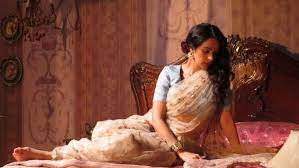
The storyline follows filmmaker RK (Rajat Kapoor) who is in the process of directing and starring in his film. He plays the lead character of Mahboob. The film opens with a nostalgic vignette for 1960s Bollywood films – the clamor on set, a high-maintenance actress as the female lead Gulabo (Mallika Sherawat) and a slight sepia tone. Everything seems to be going just fine when the editing for the film begins, but RK gets a call from the editing room. Mahboob has run out of the film and has somehow entered the real world, fleeing from the film’s cartoonish killers when RK finds him and brings him home to sort things out. RK must convince Mahboob to go back into the world of the film, as that is where he belongs.
RK/RKAY is a crowd-funded film, but you cannot tell from the incredible production quality. Director Rajat Kapoor is an experienced short and feature length film director and his expertise, even with a low budget, is evident. I am blown away by the cinematography, script and overall production quality. The film-within-a-film premise requires clear dialogue to avoid confusion, and RK/RKAY delivers. Even though it is a Hindi film, the subtitles are clear and you can easily follow what’s happening. I also love the cinematography; the film makes amazing use of light and shadows as well as colors. The film that RK is producing has a bit of a sepia or golden tint to it, as does Mahboob when he enters the real world. Depending on their mood, characters may be placed halfway, completely, or not at all in the shadow. Though the film tends to drag a bit in the second half, the whole production effort is impressive enough that one gets pulled back into the film.
RK/RKAY promotes messages of finding yourself, being dedicated to your projects, and staying true to love.
I give RK/RKAY 4 out of 5 stars and recommend it for ages 15-18, plus adults. RK/RKAY premieres in the US and Canada on May 14, 2021, in theatres and virtually.
Share this page on:
Posted in Film Critics Blog | Comments Off on RK/RKAY * A Mind-Bending, Multi-Layered Film, Shot And Edited With Meticulous Care
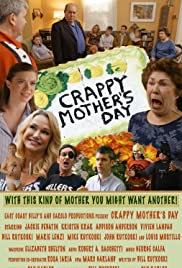
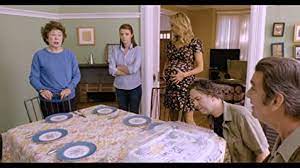
Three generations of women come together on Mother’s Day. Things don’t go as planned. KIDS FIRST! Film Critic Katherine S. comments, “If you think your family is crazy, think again. When three generations of women, Sarah (Kristen Krak), Totie (Jackie Debatin) and Grandma (Vivien Landau) attempt to celebrate Mother’s Day, things go from bad to worse – immediately. From a senile grandmother to whacky uncles to a grandpa who is buried in the backyard, keeping the family together for a single day proves a difficult task, especially when Sarah brings her fiancé into the mix. You don’t need to be a master chef to figure out that this is a recipe for a really “Crappy Mother’s Day.” See her full review below.
Crappy Mother’s Day By Katherine S, KIDS FIRST! Film Critic, age 13
Crappy Mother’s Day is sure to get some laughs out of you and it comes out just in time for Mother’s Day.
If you think your family is crazy, think again. When three generations of women, Sarah (Kristen Krak), Totie (Jackie Debatin) and Grandma (Vivien Landau) attempt to celebrate Mother’s Day, things go from bad to worse – immediately. From a senile grandmother to whacky uncles to a grandpa who is buried in the backyard, keeping the family together for a single day proves a difficult task, especially when Sarah brings her fiancé into the mix. You don’t need to be a master chef to figure out that this is a recipe for a really “Crappy Mother’s Day.”
Director Dan Karlok lets go of the reins and allows slap stick comedy to insert itself at every turn of the movie. Though the comedy is hilarious, some of the scenes are a bit longer than needed and a bit random. The acting is wonderful, making this family look absolutely wacky and wild. None of the relationships seem normal. Kristen Krak, as Sarah, really appears to be the only normal person in the family. Addison Anderson, as James, plays a very fun character that breaks out of his shell as the movie develops.
Bill Rutkoski, the crazed fiancé of Totie, is very believable. I certainly wouldn’t want him for a stepdad. Vivien Landau plays the perfect mean, old grandma. John Rutkoski and Mike Rutkoski, as Uncle Lenny and Uncle Donny respectively, nail the Planet of the Apes-obsessed uncles. My favorite characters are Grandma and Aunt Sonny (Marie Lenzie) because they are the most entertaining. They are always arguing and fighting in humorous ways, like two old, senile bats that love tormenting each other.
The message that is your family is the only family you have and, as crazy as you think they might be, they love you. Also, when getting married, be prepared for your newly expanded family and find something in common, even if it’s just Planet of the Apes boxers. There is profanity, some mature topics and heavy drinking.
I give Crappy Mother’s Day 4 out of 5 stars and recommend it for ages 14 to 18, plus adults. This film releases on VOD May 4, 2021
Share this page on:
Posted in Film Critics Blog | Comments Off on Crappy Mother’s Day * If You Think Your Family Is Crazy, Think Again!
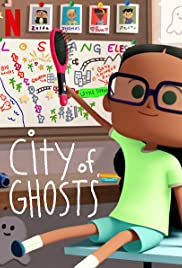
A group of kids discover stories around their city by communicating directly with the ghosts who inhabit it. KIDS FIRST! Film Critic Jude A. comments, “What could possibly be clever, charming and also refreshing? The new short series City of Ghosts! displays a new authentic animation style that is really pleasing to the eye and will make you want to watch the show more and more. The show delivers a very creative plot that makes you fall in love with both the show and its characters.” See his full review below.
City of Ghosts By Jude A., KIDS FIRST Film Critic, age 15
What could possibly be clever, charming and also refreshing? The new short series City of Ghosts! displays a new authentic animation style that is really pleasing to the eye and will make you want to watch the show more and more. The show delivers a very creative plot that makes you fall in love with both the show and its characters.
City of Ghosts follows a group of children that love ghosts. Together they decide to make a homemade show discovering different ghosts around the city. The children go to various places meeting new people and new friends.
City of Ghosts has a very different animation style than most other shows. The physical characters are animated, but the environment around them is real world settings. This seems odd at first, but over time you start to adore it. The animation really stands out because of this creative new angle of animation it delivers.
The show has many themes of friendship, family and exploration. City of Ghosts also has many morals. It teaches children the importance of creativity and the concept that you can do anything you put your mind to.
I give City of Ghosts 5 out of 5 stars and I recommend it for ages 2 to 6. This was definitely a highlight of the New York International Film Festival and is available now on Netflix.
Share this page on:
Posted in Film Critics Blog | Comments Off on City of Ghosts * Clever, Charming And Refreshing
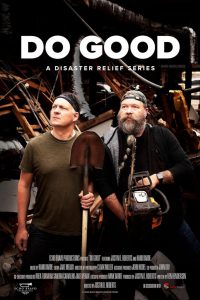
Do Good is a ten-episode docu-series premiering March 5, 2021 on YouTube that turns the spotlight on the heroic relief efforts, including by veterans, following the deadly Category 4 Hurricane Laura that devastated Southwest Louisiana in August 2020, followed just six weeks later by Hurricane Delta.
“With the recent deadly winter storms hitting much of the country, we saw many examples of neighbors rising to the occasion to help neighbors. Do Good tells similarly powerful and inspirational stories of the recovery efforts following the back-to-back hurricanes that hit Louisiana last year,” said Producer and Director Justin Roberts. “In challenging times such as our nation has been facing, it’s time to shine the light on the many people who are sacrificing for others.” KIDS FIRST! Film Critic Eshaan M. comments, “Do Good is both a heartbreaking and heartwarming show in its portrayal of the destruction and suffering that followed Hurricanes Laura and Delta, which wracked Louisiana during the COVID-19 pandemic. The show’s creators are masters in the art of storytelling. You’ll laugh and cry and will certainly be motivated to be a part of a good cause.” See his full review below.
Do Good By Eshaan M., KIDS FIRST! Film Critic, age 15
Do Good is both a heartbreaking and heartwarming show in its portrayal of the destruction and suffering that followed Hurricanes Laura and Delta, which wracked Louisiana during the COVID-19 pandemic. The show’s creators are masters in the art of storytelling. You’ll laugh and cry and will certainly be motivated to be a part of a good cause.
Do Good is the brainchild of veterans Justin Roberts and Hank Barbe, whose idea it was to learn and share the stories of those suffering from Hurricanes Laura and Delta, which hit Louisiana last year, and link arms with organizations that are working towards recovery. Once the series reaches monetization requirements on YouTube, those funds will go directly to the organizations featured in the series.
It is truly sad to see the displacement and destruction caused by the hurricanes, and you feel genuinely bad for them. The human touch to the episodes, including interjections from Roberts and Barbe, the detailed storytelling and interviews backed by soft, poignant background music, and the empathy shown by volunteers really touches your heart. I especially found the case of Christine, a 92-year-old hurricane survivor who lives in her Jeep, to be heart-rending. You’ll have to watch the show to learn more about her story.
Do Good’s message is just that: to do good and to help others in times of adversity, just like the organizations highlighted in each episode. This is a beautifully human film and is an incredible watch during the time we live in now, when kindness and altruism can seem hard to come by.
I give Do Good 5 stars out of 5 and recommend it for ages 12 to 18, plus adults. You can watch episodes 1 and 2 of Do Good on YouTube, right now!
Share this page on:
Posted in Film Critics Blog | Comments Off on Do Good * Heartbreaking and Heartwarming Show About Hurricanes Laura and Delta during COVID-19
Unlike most people, young Sara Hopkins is willing to take God at His word. So when she hears a preacher say faith can move mountains, she starts praying. What begins with a mysteriously healed bird leads to people suddenly cured of their misery and misfortune all over town. But the overwhelming crush of notoriety and press attention soon takes its toll on Sara. Will her family be able to save their miracle girl before it’s too late? KIDS FIRST! Film Critic Heather S. comments, “The moral of this film is to always let faith guide you. Even as Sarah’s health declines, she never loses her faith. She stands by God and understands that everything happens for a reason, unlike her family who try to fight the ticking clock.” See her full review below.
The Girl Who Believes In Miracles By Heather S., KIDS FIRST! Film Critic, Age 15
The Girl Who Believes In Miracles is a lukewarm Christian movie with a weak storyline. The few heartwarming scenes aren’t quite enough to keep this film afloat. With a strong performance by the ensemble’s youngest actress, the movie does not have enough storytelling to deliver a wholly satisfying movie experience.
The Girl Who Believes In Miracles centers around a little girl named Sarah (Austyn Johnson) who has seen God and can grant miracles. She helps cancer patients, and even blind and paralyzed teens. All the while, Sarah’s fame increases, with people knocking on her door to grant miracles. Sarah’s health declines, too, but she keeps up her faith.
The movie makes it clear from the beginning that Jesus is praised, and that this is not a modern version of the Messiah’s story. It is unclear, though, why Sarah holds this power to grant miracles as she has done nothing significant except have faith. The Girl Who Believes In Miracles is confusing in this way and may leave the audience wondering, “Can anyone be a Messiah?” However, the actors deliver empowering performances. In the scenes in which Sarah’s health weakens, her suffering is absolutely heartbreaking. Austyn really has the audience pulling for her. Sarah’s grandfather, Sam (Peter Coyote), also has a heartfelt monologue in which he talks to God and says he would rather die than Sarah. His love shines through, along with his pain, creating a tear-jerking scene.
The moral of this film is to always let faith guide you. Even as Sarah’s health declines, she never loses her faith. She stands by God and understands that everything happens for a reason, unlike her family who try to fight the ticking clock. As a Christian, I did find the film somewhat offensive in its message that anyone with faith can perform miracles.
I give The Girl Who Believes In Miracles 3 out of 5 stars and recommend it for ages 10 to 18, plus adults. It is available in theaters April 2, 2021.
Share this page on:
Posted in Film Critics Blog | Comments Off on The Girl Who Believes In Miracles
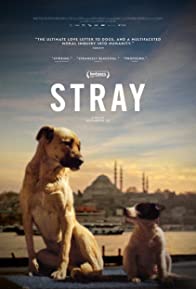
The world of Zeytin, a stray dog living life on the streets of Istanbul. KIDS FIRST! Film Critic Carlee S. comments, “Stray is a brilliant film about three beautiful dogs living on the streets of Istanbul, Turkey. Director Elizabeth Lo gives a unique perspective that allows viewers to venture into dogs’ lives and learn a lot about the country of Turkey and the people there, as well. Through the eyes of the dogs we learn about their lives on the streets and the lives of others they interact with.” See her full review below.
Stray By Carlee S., KIDS FIRST! Film Critic Age 16
Stray is a brilliant film about three beautiful dogs living on the streets of Istanbul, Turkey.
Director Elizabeth Lo gives a unique perspective that allows viewers to venture into dogs’ lives and learn a lot about the country of Turkey and the people there, as well. Through the eyes of the dogs we learn about their lives on the streets and the lives of others they interact with. We gain a better understanding of the people as we overhear conversations the citizens are having which tell us a lot about the personal lives of the people there and the living conditions. For both the dogs and some of the people, there is danger and the struggle to survive. There are also touching moments. It is an unforgettable film that helps people understand a different part of the world, the people and animals that live there, and that they all have the same basic needs of food, shelter, and friendship.
This documentary follows three dogs named Zeytin, Nazar and a puppy named Kartal. The camera follows the dogs at their level which is a very ingenious and a creative touch. As the camera rolls, we follow along and see how these dogs interact with other dogs and the humans they encounter. Not only do we get to experience a stray dog’s life, but the lives of a young group of boys also living on the streets. The dogs in Istanbul are allowed to roam around the city freely since the citizens fought to save them. We’re taken into these dogs’ lives and live it with them, seeing all the sights and sounds they see.
One of my favorite scenes in Stray is when Zeytin is in the park and notices another dog approaching. You can tell from the beginning, when we first get to know Zeytin, that she is a sweet dog. She doesn’t seem to mind the other dogs she comes in contact with and is friendly towards them. Watching Zeytin and the other dogs in the park was very enjoyable. I just loved watching them run around and being very playful. It is a scene that could have been in any part of the world. I also enjoyed watching the puppy, Kartal. The puppy’s expressions are very sweet and, the way people react to Kartal, it adds a nice touch to the film.
The message in this film is to step up for what you believe in. The citizens of Turkey made sure their voices were heard, so that dogs can freely roam, and are not to be held captive or destroyed. Every life is worth something. The dogs provide comfort to many people there. There are some warnings. Some scenes can be graphic that go with life on the streets. Some of the topics and language spoken by some of the people is also for older viewers.
I give Stray 5 out of 5 stars. I was glued to the screen and I am now a much bigger fan of documentaries after watching this film. I plan to watch more in the future. I recommend this film to ages 13 to 20. Magnolia Pictures will release Stray in theaters and On Demand on March 5, 2021.
Share this page on:
Posted in Film Critics Blog | Comments Off on Stray * Brilliant Documentary That Makes You See The Value Of Stepping Up For What You Believe In
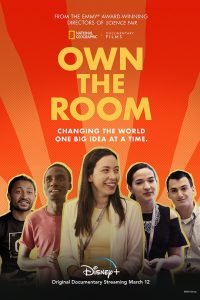
Own the Room chronicles five students from disparate corners of the planet as they take their budding business ventures to Macau, China, to compete in the Global Student Entrepreneur Awards. Santosh is from a small farming town in Nepal; Alondra works the register at her family’s bakery in Puerto Rico; Henry is a programming wiz from Nairobi; Jason is a marketing machine from Greece; and Daniela, an immigrant fleeing the crisis in Venezuela, is taking on the chemical industry from her lab at NYU. In the uplifting film, each of the business hopefuls has overcome immense obstacles in pursuing their dreams, from hurricanes to poverty to civil unrest. As they represent their countries as the top student entrepreneurs, the high-stakes global finals are their opportunity to win worldwide attention and the coveted $100,000 grand prize to make their life-changing business ideas a reality and transform the world. KIDS FIRST! Film Critic Dominic D. comments, “…an uplifting movie that has us digging into our “emotional toolbox” as we follow the heartfelt journeys of young entrepreneurs bringing change for future generations. The optimism of these individuals is so incredible and can certainly be appreciated by anyone working hard to pursue their dreams.” See his full review below.
Own the Room By Dominic D., KIDS FIRST! Film Critic, Age 11
Own the Room is a new feature documentary from National Geographic Documentary Films directed by Cristina Costantini and Darren Foster. This directing duo delivers an uplifting movie that has us digging into our “emotional toolbox” as we follow the heartfelt journeys of young entrepreneurs bringing change for future generations. The optimism of these individuals is so incredible and can certainly be appreciated by anyone working hard to pursue their dreams.
Own the Room follows the paths of five young innovators from across the globe who showcase their business plans to “change the world one big idea at a time.” These individuals overcome cultural obstacles and push the limits in order to reach the top. Santosh, Alondra, Henry, Jason and Daniela have each qualified to represent their country at the annual Global Student Entrepreneur Awards in Macau, China. Each has the dream of taking their business to the next level to become the world’s most influential change-maker. Aside from setting their eyes on the prize of $100,000, each hopes to raise awareness that “no matter where you come from, it does not define where you are going.” They are each proud of their culture, their family support, and the chance to represent their country.
I enjoyed the emotional conversations in which the students share their cultural backgrounds and find their words to be genuine and spirited. Their determination, confidence, and fearlessness kept me wanting to see more. Costantini and Foster are clever to include the lifestyle, family background and the obstacles that each of these students face. That allows viewers to appreciate the students’ journeys even more and perhaps to gain a better understanding of each of the young entrepreneurs’ business ideas. The cinematography is fantastic, taking us into five areas of the world and showing viewers a variety of ways of life. The society in which you live does indeed partly shape you as an individual, and yet this documentary proves that it doesn’t have to hold you back.
Own the Room delivers many messages and mainly demonstrates how determination is at the root of all success. If you are determined, you will be driven to work hard to achieve no matter how many obstacles confront you. Challenges serve to strengthen us. It is this determination that we see in each of the student entrepreneurs and which becomes so inspiring to viewers. Given the current state of the world right now, an inspiring film such as Own the Room is exactly what we need.
Share this page on:
Posted in Film Critics Blog | Comments Off on Own the Room * Heartfelt Journeys of Young Entrepreneurs
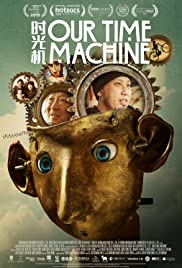
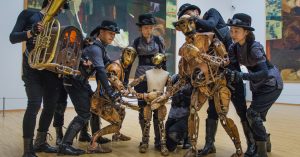
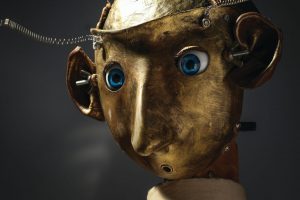
When influential Chinese artist Ma Liang (a.k.a. Maleonn) realizes that his father Ma Ke, an accomplished Peking Opera director, is suffering from Alzheimer’s disease, he invites his father to collaborate on his most ambitious project to date – a haunting, magical, autobiographical stage performance featuring life-size mechanical puppets called “Papa’s Time Machine”. Through the creation of this play, the two men confront their mortality before time runs out and memories are lost forever. KIDS FIRST! reviewer David O. comments, “Our Time Machine offers such an emotional journey about the reality of Alzheimer’s disease. This is a documentary about a son doing what he can to show his appreciation toward his father, who is has Alzheimer’s disease. This film is beautifully created, with a very emotional tone as we get to the see the production of the play and the hardships it faces, while we also see the father’s health declining.” See his full review below.
Our Time Machine By David O., KIDS FIRST! Reviewer
Our Time Machine offers such an emotional journey about the reality of Alzheimer’s disease. This is a documentary about a son doing what he can to show his appreciation toward his father, who is has Alzheimer’s disease. This film is beautifully created, with a very emotional tone as we get to the see the production of the play and the hardships it faces, while we also see the father’s health declining. It shows the ups and downs in the art world and what a son is capable of doing to express his gratitude and appreciation.
A Chinese artist creates the biggest project of his career – an autobiographical play that uses mechanical puppets to tell the story. He struggles with time, money and his father’s health, as he becoming more and more ill with Alzheimer’s disease.
Our Time Machine is the documented story of Maleonn and his father Ma Ke. Throughout the film, we learn about the background of the family, and how invested they are in the art world. The story really shows the emotions that the son is feeling, as he feels frustrated, sad, emotional, but excited at the same time. It is an emotional journey, as there are father/son moments that are very touching, but also the doctor visits for the father are extremely sad as they show his health degrading. The main parts of the film are how the play is taking direction and its process, and the counterpart of how Ma Ke’s health is declining to the point he does not remember the most basic aspects of life.
The camera work is diverse as it moves from scene to scene, depending on the context of the work. There are moments where pictures are shown or celebrations, such as birthdays and anniversaries, take place in real time. The camera moves as the characters move, and capture the complete context of the scenes. The locations vary throughout the film. The flow is very continuous, and everything takes place in different scenarios. The two central sets of the documentary are the parents’ house and the place where the play takes life. In addition, locations from the past and present, and even outside the country can be observed.
There is little background music, and it changes from scene to scene. It does not drive the action in the film as much as the conversations between all the characters. That is what gives life to the film. But the sound effects are essential to get the complete message. They vary and are mostly focused to enhance dialogues between the puppet father and the puppet son. They help with the flow of the play and how it is presented in stage. All the visual effects take place in scenes where the son or the father are reminiscing about the past, and in scenes where the son is dreaming and creating his play. They are remarkable, as they are thoughts that are later done exactly how they were intended.
This documentary took around three years to complete, focusing on the artist Maleonn and his family. There are many persons involved in the film, as it shows the family of the protagonist as well as his team and employees that give life to the play.
Everything that Maleonn does in this film has an ultimate goal – to show his appreciation and gratitude to his father before is too late. He does everything he can to make this possible, but time and money are to his disadvantage. Everything that we see and feel during the documentary just highlights the main message: We need to appreciate and embrace every moment with others before it is too late. In this case, the artist tries to do this with his father who is forgetting everything and everyone around him. This is a hard reality for many families around the world, and it is necessary to live and appreciate those good moments before the bad ones that may come in the future. Sometimes those good moments are the ones that give us strength and hope for the hard ones that can come.
You should know that it contains some profanity and behavior. There is a scene where the artist is celebrating his birthday with his colleagues. They are drinking heavily and use some mild language, d*mn and *ss. Also, smoking is a recurrent act throughout the movie. Almost all the main characters can be observed smoking at some point of the film.
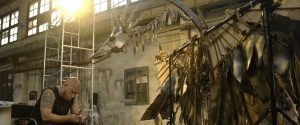
What I love about this film is the engineering process of creating every single thought Maleonn has. I was mesmerized by the creativity and the work that took place to create all the pieces of the stage and the mechanical puppets. They are so realistic and so well designed. The scenarios in the play are breathtaking. They recreate a plane from scratch and everything is neat and planned. I was in awe in every single scene where all these elements are shown, as they are incredibly created and structured. The protagonist is Chinese artist Maleonn. His father Ma Ke, is a well renowned Peking Opera director.
I give Our Time Machine 4 out of 5 stars and recommend it for ages 15 to 18, plus adults. This film is beautiful in all areas. It has great production values, a real and emotional storyline, it sends across a valuable message, and the use of art and creativity throughout the documentary is of high quality. It is a rather complex film, as it is intended for older audiences such as older teenagers and adults. Also, it shows the hard reality of a person with Alzheimer’s and the emotional toll that takes on the family. This film shows the frustration, the sadness, the rawness of the desperation in the father’s face, and that makes it more touching and real. I shed some tears when I saw these scenes, as I could see the impotence of both the father and the son in different moments, and that is what really made me think about my family and how to appreciate every moment I get to share with them. Our Time Machine is playing in select film festivals now.
Share this page on:
Posted in Film Critics Blog | Comments Off on Our Time Machine – What an Emotional Journey about the Reality of Alzheimer’s Disease