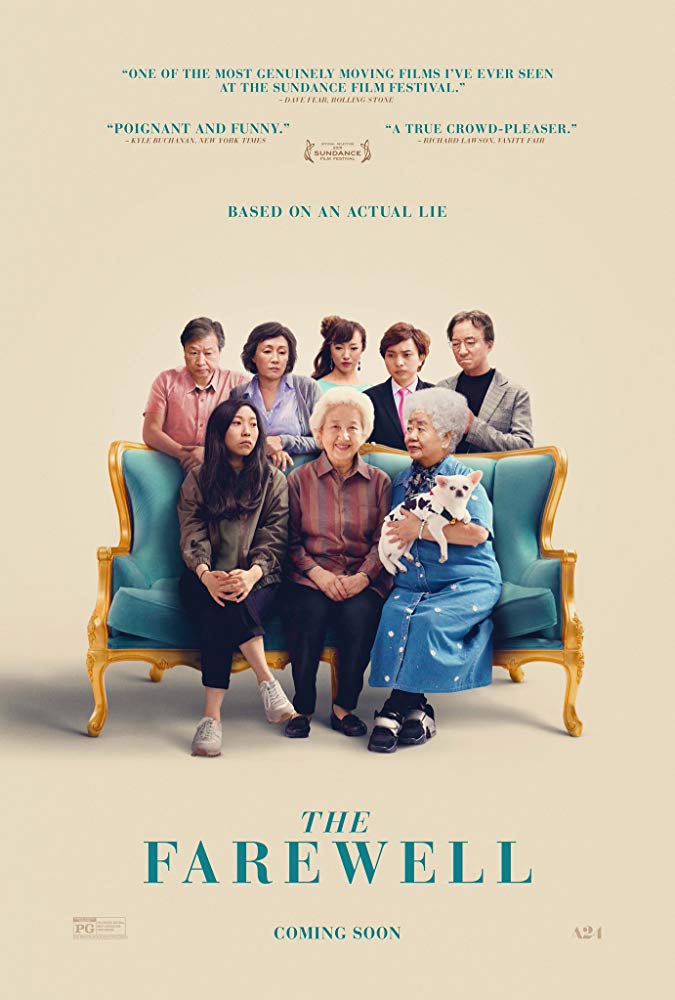
A headstrong Chinese-American woman returns to China when her
beloved grandmother is diagnosed with terminal cancer. Billi struggles with her
family’s decision to keep grandma in the dark about her own illness as they all
stage an impromptu wedding to see grandma one last time. KIDS FIRST! Film
Critic Jolleen M. comments, “This film rocked everyone’s emotions. Although
there are multiple instances where the film is a bit slow, the overall
emotional impact is great. There are moments of comedic relief throughout. I
think that everyone can relate to this film in some way. I made connections
with some of the ideas and scenes even though I am not Chinese.” See her full
review below.
The Farewell By Jolleen Mejia, KIDS FIRST! Film Critic, age 14
This film rocked everyone’s emotions. Although there are
multiple instances where the film is a bit slow, the overall emotional impact
is great. There are moments of comedic relief throughout. I think that everyone
can relate to this film in some way. I made connections with some of the ideas
and scenes even though I am not Chinese.
The Farewell is about Billi and her family’s reunion in China. They reunite because their grandma has developed
lung cancer and the doctor says she only has weeks to live. The family chooses
not to tell Nai-Nai (grandma) that she has lung cancer. Instead, they tell her
that they are reunited for a wedding. Billi’s family tells her that the reason
for not telling Nai-Nai is that it’s not the cancer that kills, but the fear.
The film is all about appreciating the time you have on earth and with your
family. There are many moments of stillness, included watching the wind blow
through the trees, for 30 seconds or more. I find this aspect of the film
beautiful, as it reminds me of the phrase, “stop and smell the roses.” But
others might interpret these moments as filler scenes and pointless.
Awkwafina, as Billie, is an exceptional actress. You can feel
the emotion she conveys through the screen, even if she doesn’t say anything.
For her role she needs to show the audience that she is deeply troubled, but
also show that she tries to hide her feelings from her grandma. That is very
difficult to do and she does it perfectly. Without this, the film would lose a
lot of its emotional impact.
The music sets the mood very well for some scenes, but in
others silence and black screens are set
the mood. Sometimes it’s the noise of nature, like the wind blowing through the
leaves. Scenes like these are what makes the film divergent.
The message of this film is about being appreciative of all
aspects of life. Billie begins to realize that while she spends time with her
family in China. Every moment is a gift. I
love that the film is quite simple yet it has such a powerful effect.
I give this film 5 out of 5 stars and recommend it for ages 11
to 18, as well as adults. There are innuendos, use of alcohol, cigarettes and
some bad language. Despite this, the film will move you to tears so check it
out! It comes out July 12, 2019 in theaters!
Share this page on:
Posted in Jury Updates | Comments Off on The Farewell – Everyone Can Relate To This Film in Some Way
Annie Potts (Anne Hampton Potts), and Katherine S., Toy Story 4
Anne Hampton Potts is an American actress. She was nominated for a Golden Globe Award for Corvette Summer(1978) and won a Genie Award for Heartaches (1981), before appearing in Ghostbusters, Pretty in Pink, Jumpin’ Jack Flash, Who’s Harry Crumb? and Ghostbusters II. She also voiced Bo Peep in the Disney and Pixar animated films Toy Story, Toy Story 2 and Toy Story 4.
Toy Story 4 is an American computer-animated comedy
film produced by Pixar Animation Studios for Walt Disney
Pictures as the fourth installment in Pixar’s Toy Story series,
and the sequel to 2010’s Toy Story 3. Annie Potts stars as the
voice of Bo Peep and is joined by the voices of Tom Hanks, Tim Allen, Tony
Hale, Christina Hendricks, Keanu Reeves, Joan Cusack and more. Toy
Story 4 will be theatrically released in the United States on June 21, 2019,
in RealD 3D, Dolby Cinema, and IMAX.
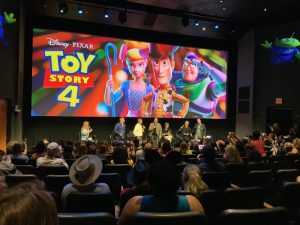
KIDS FIRST! Film Critic Katherine S. attended a special Disney event in Orlando, FL June 7 and 8 where she got to screen the film and meet some of the talent. A highlight of the weekend was having the delightful opportunity to interview film star Annie Potts about her role in Toy Story 4! Here is what she learned.
https://youtu.be/hK8xWgd91kk
KATHERINE: How was your preparation different for Toy
Story 4, compared to a live action movie?
ANNIE POTTS: In
a normal movie, I get the chance to read the script ahead of time. But for this movie we read the script at the
studio and we never had the full script.
We normally record alone in the studio but this time I spent a lot of
time with Tom Hanks in the studio recording our scenes.
KATHERINE: That’s
interesting. Do you change your voice when you play Bo Peep? Can you give us an example?
ANNIE POTTS: Yes,
I do change my voice a little bit. I try
to make it more “breathy,” like “Hi, Woody” and “Oh, Woody.”
KATHERINE: What is your
favorite song from this movie?
ANNIE POTTS: “You
Got a Friend in Me.” It always makes me
a little teary.
KATHERINE: Yes, I love that song too! What would you
like people to take away from this film?
ANNIE POTTS: First, love is so important. Second, you have to be able to move on in
life.
Later at the Press Junket with Mark Nielson, Jonas Rivera, Josh Cooley, Christina Hendricks, Tim Allen, Keanu Reeves…
KATHERINE: It’s amazing that the first Toy Story movie came out 24 years ago
and yet there are a core group of actors and characters that star in all the Toy Story movies. This question is for all of you, what do you
do to help make new actors and new characters feel like they belong?
JOSH COOLEY, DIRECTOR: That is a great question.
With the new toys in this film, we looked at the toys we grew up and played
with. If you look at the original Toy
Story some of those toys are more classic toys like Slinky and Mr. Potato
Head. So we went more to the 70s and 80s
in terms of toys and then we just tried to figure out characters that weren’t
there on the screen just to be characters, but actually helped the story move
along and supported Woody as much as possible.
And overall, entertaining as well.
So it’s a great question because it’s really hard to do if you loved Toy Story already and then tried to
introduce new characters and hope you like these characters just as much. Hopefully
you do.
JONAS RIVERA, PRODUCER: You don’t do it just for the
fun of it. Gabby Gabby for example – the story would not work without Gabby
Gabby. She’s an echo of Woody and we
needed her to be this legit and real and truthful human character. Same thing for Duke Caboom and Giggle and
everybody new. They’re not just for fun,
although we love them, but this movie would not work without them. And that’s kind of our metric.
Later at the Press Junket with Mark Nielson, Jonas Rivera, Josh Cooley, Annie Potts, Tom Hanks, Tony Hale
KATHERINE: For Mr. Tom Hanks, thank you for photo
bombing me.
TOM HANKS: Oh, you’re Katherine. Stand up so I can see you. Now was that actually, did I photo bomb you when you were presenting? Sorry I photo bombed you.
KATHERINE: (blushes) I just want to know if you
think Woody and Bo Beep will get married because they are the cutest couple.
TOM HANKS: Awwhhhh.
Well…
ANNIE POTTS:
Wait, this could be [Disney] talking points.
TOM HANKS: I
will say that Woody has known since 1994 that Bo was the figurine for him. He just always knew. And let me check these talking points. (Audience laughs) (Tom Hanks pulls out paper
with Disney provided talking points)
ANNIE POTTS: They’re getting harder and harder to
find.
TOM HANKS: (Reads from paper) Toy Story 4 reunites Woody and his long lost friend Bo Peep who’s become an adventure-seeking free spirit. They discover that they are worlds apart when it comes to life as a toy and yet, they know that fate is an odd thing and there is no substitution for love in this crazy kooky confusing world. “Come on gang!”
Here’s Katherine’s summary of her awesome visit to the event…
And here’s her review of Toy Story 4 which opens nationwide June 21, 2019.
Share this page on:
Posted in Jury Updates | Comments Off on Toy Story 4 Annie Potts Interviewed by Katherine S.
I had so much fun while I was at Disney World for the Toy Story 4 press events! I attended a
screening of Toy Story 4, rode some great
rides, watched amazing outdoor animation shows at the Magic Kingdom, took pictures
with the Toy Story 4 characters and some
of the voice actors of those characters, interviewed Annie Potts who voices Bo
Peep and attend two press junkets! Wow! It was a very full two days.
On Thursday, I flew to Orlando
with my parents and settled in. On Friday, I rode some fun rides at Disney
World and went to the screening of Toy
Story 4, which is the best one of the Toy Story movies. By the time
the screening ended, the park was closing so I had dinner with my parents. As the park closed, there was a vibrant
display of fireworks, animation and a Star Wars laser light show. Disney kept Toy Story Land open for the press
after the park closed and I got to take fun pictures with the Toy Story
characters.
When we were filming an intro for my video, Tom Hanks ran into the screen and totally “video bombed” me! That was absolutely awesome. He is such a nice person! Then I went to two press junkets and got to ask a question in each session. The director complemented me on my questions and Mr. Hanks made me stand up during my question so that we could talk about his video bombing. He made me laugh the entire time. Once the press junkets ended, we flew back to Chicago.
On Saturday, I interviewed Annie Potts who plays Bo Peep in the movie. Annie Potts is so, so, so lovely and inspiring.
My trip was one of the best ever. Everyone from Disney to the
actors in the movie were so kind to me. I will remember it forever.
Share this page on:
Posted in Film Critics Blog | Comments Off on Toy Story 4 Special Press Event by Katherine S., KIDS FIRST! Film Critic, age 10
Anne
Hathaway and Rebel Wilson star as female scam artists, one low rent and the
other high class, who team up to take down the men who have wronged them.
KIDS FIRST! Film Critic Abraham F. comments, “The Hustle is an extremely mixed bag of a movie. On one hand, it’s very entertaining and had
the entire theatre laughing because of the raunchy humor and continuous jokes,
but this is also its weak point.” See his full review below.
The Hustle By Abraham F., KIDS FIRST! Film Critic, age 14
The Hustle is an extremely mixed bag of a
movie. On one hand, it’s very
entertaining and had the entire theatre laughing because of the raunchy humor
and continuous jokes, but this is also its weak point. The jokes keep on coming
and coming, but they are all so similar that after awhile they get boring. The
jokes are either fat jokes or raunchy sexual jokes and easily get stale.
The Hustle is adapted from the film Dirty Rotten Scoundrels, and it features two huge stars in the lead: Anne Hathaway as Josephine and Rebel Wilson as Penny. The story follows Penny, a con artist who catfishes men and takes their money. She is coincidentally on a train with world-class con artist, Josephine. Josephine overhears Penny’s tactic to get money from an old man. She is afraid that Penny is going to “take over the market”. So to get Penny out of the city she operates in, Josephine trains her and doesn’t pay her, just to make her mad and force her to leave. This causes Penny to retort and purpose a turf war.
The Hustle has two huge stars leading the film.
Anne Hathaway and Rebel Wilson are both predominant stars. Anne Hathaway is an
Oscar-winning actress for her works in Les
Misérables and has gotten praise for her performance as Catwoman in The Dark Knight Rises. Rebel Wilson has been in
franchises like Pitch Perfect and Night
at the Museum.
My favorite part of this film is when Penny is getting trained by Josephine to be world-class con artist like herself. Josephine shows Penny how to react to any situation by teaching her tricks that are used in a heist and not really to scam a man for money.
The
message in this movie is that just because you’re a con person trying to steal
money from men who have done you wrong doesn’t make all men evil. This movie
has a lot of swearing and crude sexual remarks, and I strongly advise parents
to look into the content before taking their kids. This film is no doubt
entertaining, but once the jokes get stale the film does as well. The Hustle is appropriate for children
14 to 18. I give it 2 out of 5 stars. The Hustle hits theatres Friday, May 10,
2019.
Share this page on:
Posted in Film Critics Blog | Comments Off on The Hustle – Entertaining But Filled With Raunchy Humor
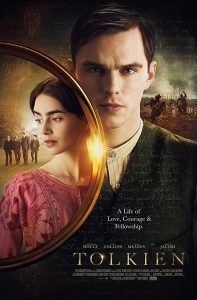
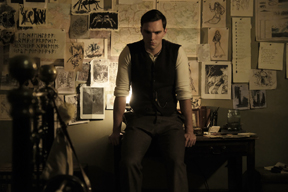
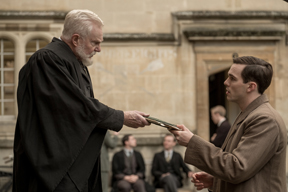
Tolkien explores the formative years of the
orphaned author as he finds friendship, love and artistic inspiration among a
group of fellow outcasts at school. This takes him into the outbreak of World
War I, which threatens to tear the “fellowship” apart. All of these
experiences would inspire Tolkien to write his famous Middle-Earth novels. KIDS
FIRST! Film Critic Rohan F. comments, “Tolkien
is an incredibly heartwarming film telling the story of John Ronald Tolkien’s
life and how he drew inspiration for his books. This film is extremely
entertaining for a biopic. It tells his life story in a way that shows how
events throughout his life fueled his imagination to create his incredible
fantasy stories.” Calista B. adds, “A mind like Tolkien is very intriguing. I
was interested in how creativity and imagination are the central focus of the
movie. As I writer, I get very excited when I hear how “creativity can change
the world,” because that is something I believe in very deeply. So, I enjoyed
that very much. “ See their full reviews below.
Tolkien Reviewed by Rohan Foxe, KIDS FIRST! Film Critic, age 13
Tolkien is an incredibly heartwarming film
telling the story of John Ronald Tolkien’s life and how he drew inspiration for
his books. This film is extremely entertaining for a biopic. It tells his life
story in a way that shows how events throughout his life fueled his imagination
to create his incredible fantasy stories. It brilliantly represents how people
make connections with other people and events that inspire creativity.
Tolkien begins with J.R.R. Tolkien in a small
camp in a WWI trench, where he is having visions of mythical creatures
battling. It then cuts to him as a child and shows how he always loved these
mythical creatures that he wrote about. Suddenly, due to a lack of money, his
family is forced to move to the city where he has no friends. He and his
brother are admitted to a prestigious school on scholarships where he makes
some lifelong friends.
The use of
imagery in this film is incredible. Lots of normal things are transformed by
John’s imagination into incredible creatures from myths and legends. Many of
the things that John experiences over the course of his life are mirrored by the
events in his books. The film excels at showing that Tolkien was really
passionate about his writing and the use of language. The war scenes in the
movie are quite graphic and hard to watch, but show the inspiration for
Tolkien’s epic battle scenes in his writings.
One thing I
disliked is the way the movie starts. It begins with a scene of two CGI horses
being ridden into battle. The CGI used isn’t that great and is a terrible
choice for the opening scene, because it instantly turns down the audience and
makes it just a little bit harder to get their support. However, the story is
strong enough to compensate for that and you become quickly lost in the world
of Tolkien’s imagination.
The moral of
this film is that you should try to accomplish your goals and overcome
obstacles. This is told throughout Tolkien’s journey. He constantly tries to
accomplish different goals and is incredibly dedicated to finishing them. There
is also an integral message about dealing with loss. This
is shown in how he deals with the many devastating losses in his life.
The music in
this film is great. It is exciting and conveys a strong tone that matches the
film incredibly. It is very interesting and has a lot of variety. I give this
movie 5 out of 5 stars and recommend it for ages 11 through 18, because it
covers some heavy topics that are unsuitable for younger viewers. Any fan of
the writings of JRR Tolkien will love this. It is one of my favorite films and
I am certain I will watch it again. It opens in theaters May 10, 2019 so look
for it.
Tolkien
By Calista Bess, KIDS FIRST! Film Critic, Age 15
At this
point, it’s hard not to know about J. R. R. Tolkien. Given that The Hobbit and
The Lord of The Rings are behemoths in pop culture, you’ve no doubt
heard of the author. Even though I’m not a Tolkien fan, I’ll admit this movie is
quite interesting.
This movie
is a biopic about the early life of J. R. R. Tolkien showing his high school
years, him building his strong friendships, falling in love with Edith Bratt – all
culminating in the creation of The Hobbit.
A mind like
Tolkien is very intriguing. I was interested in how creativity and imagination are
the central focus of the movie. As I writer, I get very excited when I hear how
“creativity can change the world,” because that is something I believe in very
deeply. So, I enjoyed that very much.
A big focus
of this movie is about how friendships we build in school can push us and help
us ascend to become better artist. Early in the movie, Tolkien befriends three
boys – Robert Gilson, Christopher Wiseman and Geoffrey Bache Smith. They form
The TCBS Club which created such a strong brotherhood that it probably would
have lasted a lifetime, if not for the war. Most of the scenes in this movie
focus on their relationship and the performances really bring their friendship
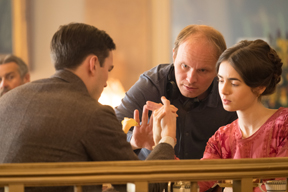
to life. Speaking of which, I really enjoyed the performances in this film. The
two leads, Nicholas Hoult as Tolkien and Lily Collins as Edith Bratt, work
really well together. Not only do they have a lot of charm, but they also have
a lot of chemistry. There’s one scene where they’re in a restaurant and talking
about Tolkien’s stories and languages. The dialogue feels very natural.
Something about the whole scene is very immersive and charmingly romantic,
without being cheesy, which is very rare in modern cinema.
I like how references
to Tolkien’s future works are sprinkled throughout the film. From he and Edith
going to see an opera about a magic ring, to a very well shot scene from
Tolkien’s time in World War 1 where he sees fantasy creatures throughout the
battlefield, it reminded me of how I picture scenes for my own stories.
I give this
movie 3 out of 5 stars and recommend it for ages 13 to 18, plus adults. It
comes out May 10, 2019. Look for it, especially if you are a fan of his
literature.
Share this page on:
Posted in Jury Updates | Comments Off on Tolkien – An Incredibly Heartwarming Film Telling How J. R. Tolkien Drew Inspiration for His Books
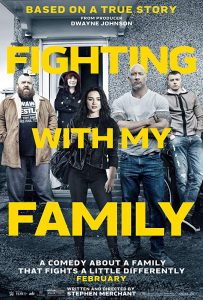
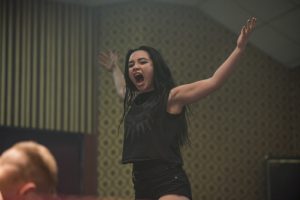
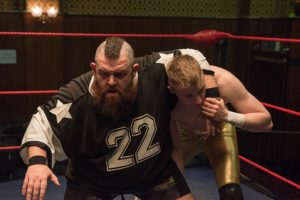
Born into a tight-knit wrestling family, Paige and her brother Zak are ecstatic when they get the once-in-a-lifetime opportunity to try out for the WWE. But when only Paige earns a spot in the competitive training program, she must leave her loved ones behind and face this new cutthroat world alone. Paige’s journey pushes her to dig deep and ultimately prove to the world that what makes her different is the very thing that can make her a star. KIDS FIRST! Adult Reviewer Kimbirly O. comments, ” When I heard about this film, I thought, “What a crazy title!” Well, it is not so crazy; it is enchanting.” See her full review below.
Fighting With My Family By Kimbirly O., KIDS FIRST! Adult Juror
When I heard about this film, I thought, “What a crazy
title!” Well, it is not so crazy; it is enchanting. This film is based on a
true story and follows the antics of a former wrestler and his family, as they
make a living wrestling in small venues in northern England. The family is in the
business, and the kids dream of making it in big in the WWE (World Wrestling
Entertainment).
While wrestling is not my jam and the film is slow at times,
it captured my heart with big family values – life lessons about believing in
oneself and each member of one’s family. The sibling wrestlers Saraya (Florence
Pugh) and Zak Knight (Jack Lowden) have trained for the big stage of wrestling
since they were young. In fact, Zak reminds us that this was his dream since he
was three. When they get the call from a WWE scout named Hutch (Vince Vaughn),
it is a dream come true. On the other hand, is it?
Florence Pugh is fantastic and I cheered for her throughout
the film. Her family brings a lot of comedy and grit to their roles. Dwayne
“The Rock” Johnson is in all the trailers and has some key scenes. He will
definitely help sell tickets! It is great to see Vince Vaughn in a positive and
upbeat role.
I give this film 3 out of 5 stars and recommend it for ages 8
to 18, as well as adults. The stunts are detailed and outstanding. The
choreography is flawless. The casting is great. The costumes are authentic and
there are many laugh-out-loud lines. You do not have to be clan of grapplers in
Norwich, England to like this film! The film
screened at the 2019 Sundance Film Festival and opens in theaters nationwide February
22, 2019. Look for it!
Share this page on:
Posted in Jury Updates | Comments Off on Fighting With My Family – Captures Your Heart With Big Family Values
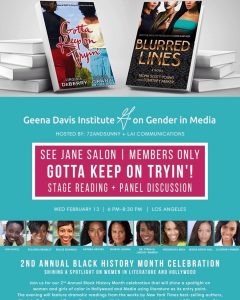
Shining A Spotlight on Women in Literature and Hollywood Hosted by 72andSunny & LAI Communications
The 2nd Annual Black History Month celebration once again shines a spotlight on women and girls of color in Hollywood and media using literature as its entry point. The evening featured dramatic readings from the works by New York Times best-selling authors, Virginia DeBerry and Donna Grant, along with the newest release of the novel, Blurred Lines, by Courtney Parker and Mona Scott Young. An empowering panel discussion followed on the current state of women of color in Hollywood and media. The panel also highlighted recent research studies by Baylor University as well as Creative Artists Agency and shift7. The former study found that movies starring women of color had strong staying power (which equals profitability) in movie theaters on an average of 20 weeks. The latter study looked at movies, from 2014 to 2017, and found that films with female leads earned more than their male-led counterparts. With all of the great successes and progress for women in 2018, there is still more work to do. We “Gotta Keep on Tryin!”
Moderator: Madeline Di Nonno, CEO, Geena Davis Institute on Gender in Media; Panelist: Yolanda Brinkley, Founder, Diversity in Cannes; Kellee Edwards, Travel Expert & Television Host; Sharon Liggins, PR Strategist; Tyrha M. Lindsey-Warren, PhD/MBA, Business Executive, Artist, Entrepreneur; Courtney Parker, VP Alternative Programming, Adaptive Studios and Co-author, Blurred Lines; Actors: Joni Bovill, Napiera Groves, Benita Krista Nall, Fredericka Meek
Gotta Keep On Tryin’! By Samantha Marcus, KIDS FIRST! Film Critic, Age 19
I absolutely loved attending the stage reading and panel
discussion about gender in media. It left me feeling empowered, driven and
motivated. While there aren’t as many women in media as there are men, we can
change that. After hearing about five successful women finding their voices and
making a difference in the world, I can’t wait to do the same.
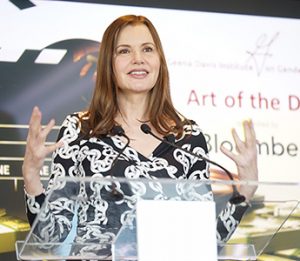
Hosted by the Geena Davis Institute on Gender in Media, this
event highlighted the dynamics of gender in media, shining an immense spotlight
on women of color in literature and Hollywood.
Women of different races, backgrounds and lifestyles gathered to view stage
readings from two pivotal novels: Gotta Keep On Tryin’! by Virginia Deberry and Donna Grant, and Blurred
Lines by Mona-Scott Young and Courtney Parker. Both novels illuminate the power
of women and recognize how women need to be a driving force in changing the way
they are represented in society today. The panel discussed their career paths
and struggles within our ever-growing and diverse society
The panel consisted of Yolanda Brinkley, Keller Edwards, Sharon
Liggins, Dr. Tyrha Warren and Courtney Parker. Each woman emphasized how never
giving up is imperative in making your dreams come true. I admire how Courtney
Parker, co-author of Blurred Lines, personalized her writing passions by
sharing how she questioned Goldilocks and the Three Bears, when she was only
four years old. Kellee Edwards developed her own show Travel Channel after she
filmed herself traveling the world on YouTube.
My favorite part was meeting Geena Davis. She is such an inspiration to me and she was so happy to take a picture with me. I aspire to be like her when I grow up. The message of this event is to find your voice. It wasn’t easy for these women, but once they did, nothing was impossible. This event was appropriate for ages 13 to 18, as well as adults. Teenage years are divine in a young woman’s life, so make the most of them. To learn more about the Geena Davis Foundation, become a member and attend their monthly events, go to www.seejane.org. To all the young women reading this, promise me you’ll let nothing stop you. If men can do it, so can we!
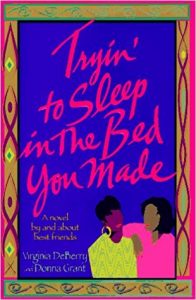
Tryin’ to Sleep in the Bed You Made Shining A Spotlight on Women in Literature and Hollywood By Jordan M., KIDS FIRST! Film Critic, Age 12
On February 20, the Geena Davis Institute on Gender
in Media hosted a See Jane Salon celebrating the 20th anniversary of Tryin’ to Sleep in the Bed You Made by
New York Times best-selling authors Virginia Berry and Donna Grant. Held in
honor of Black History Month, the event was a lively discussion about the state
of people of color in media.
Founded by Academy-Award winning actor Geena Davis, the Institute is a research-based organization in the media and entertainment industry focused on eliminating bias, highlighting gender balance and challenging stereotypes.
The event featured dramatic readings from some of
the authors’ most popular books including Tryin’
to Sleep in the Bed You Made, Gotta Keep on Trying, What Doesn’t Kill You and Far from the Tree. Readings featured actors Roseanne Currry,
Magaly Coleman, Lisa Wilkerson and Harry Lennix.
Each of the performances took the audience through a
range of topics from friendships to a troubled marriage to young womanhood.
Some of the scenes were humorous and others were more traumatic and emotional.
It was interesting to see all of the books portrayed live, a much different
experience than just reading them. It was like watching a play in action with each
book a different scene.
The readings were followed by a panel discussion on the state of people of color in the media. The panel was moderated by Madeline Di Nonno, CEO of the Geena Davis Institute on Gender in Media. Madeline kicked off the discussion by asking each of the panelists to share their journey to success, including challenges, and then provide advice for breaking into the industry and share their thoughts on where media is now. It was a lively discussion filled with humor and honesty.
Authors Virginia DeBerry and Donna Grant shared their journey to becoming best-selling authors and the challenges of breaking into the literary industry as women of color. They discussed their journey from meeting as plus size models in the fashion industry, to becoming best-selling authors. Tyrha Lindsey-Warren discussed her experience working in television and film development with the Creative Artists Agency and Edmonds Entertainment. Actor Harry Lennix, currently on NBC’s hit show The Blacklist, discussed his process to becoming a successful actor from stage to screen. He noted that in order to become an actor, you need to study the work of those that you admire. Entrepreneur Yolanda Brinkley, discussed founding Beyond Borders: Diversity in Cannes. The goal of her program is to highlight diversity in independent film at the international festival each year. Yolanda discussed the importance of people of color in Hollywood having a seat at the table. Because Beyond Borders is not yet an official part of the festival, Yolanda stressed pushing hard to advocate for what you are passionate about doing. She is still striving to make it an official event, but shared how she works to reach out to actors and filmmakers of color to get the word out and the event is growing each year.
Talking with
author Virgina DeBerry about the direction of women and people of color in the
media, DeBerry stated “We need to continue to get better representation,
especially for women in the media. We are so interesting and have so many
facets and the media tends to pigeon hole people. We need to be able to break
out of the slot and show all that we have to offer.”
The event and the panel discussion was inspiring. It
was good for the audience members to not only hear the journeys of the
panelists, but get their advice on how to begin journeys of their own.
Share this page on:
Posted in Jury Updates | Comments Off on See Jane Salon – Gotta Keep on Tryin’!
With a new generation of critically acclaimed genre films making
big bucks and becoming indispensable internet memes, ever wonder why certain
movies just seem to keep you on the edge of your seat more than others? The
final night of the 2019 DCU features a crack team of cutting-edge midnight
movie mavericks, whose collected works have shocked and thrilled millions of
audience members the world over.
Director’s Close Up: Thrill Seekers: Directing Dynamic Genres By Gerry O., KIDS FIRST! Film Critic, Age 16
In the cloudy
evening of February 27, 2019, Film Independent hosted the final panel of their
month-long event, Director’s Close-Up. The event featured many directors in the
horror genre such as Fade Alvarez (writer/director, The Girl in the Spider’s
Web, Don’t Breathe), Drew Dowdle
(writer/producer, Waco, Quarantine), John Eric Dowdle (writer/director, Waco, Quarantine),
Aaron Katz (writer/director, Gemini,
Land Ho!) and Daniel Stamm
(director, Fear the Walking Dead, The Last Exorcism). The panel was
moderated by Scott Mantz (film critic, Collider).
These filmmakers
had no interest in monsters, giant bugs, ghosts, or ghouls. They all wished to
invest their time into a much deeper side of terror. Alvarez’s Don’t Breathe
made the audience afraid to move or make a sound. Drew and John Dowdle’s As
Above causes viewers to feel claustrophobic, struggling to breathe and
wishing for more room. While it may seem simple to terrify an audience, Stamm pointed out a fundamental crux
of horror filmmaking:
There is only a finite amount of methods to scare someone, causing a
completely brand-new concept in horror to be a rare sight.
Horror has also
been the place for many directors with smaller budgets to undertake. Drew and
John attempt to make their film like a business for investors. They illustrate
a detailed step-by-step plan that allows the film to have high chances of
making a profit. Their strategy gives investors a clear end goal, motivating
them to contribute to the film. They did add though, that a smaller budget can
perhaps make a film even more terrifying, since the crew cannot afford to
actually show what causes the fear. Merely hinting at the presence of something
can greatly increase the intensity. Katz
thought that dealing with a low-budget properly can make the film even more
exciting and Stamm believed
that a micro-budget and no budget gives you true creative freedom to do what
you wish instead of running after investors. After receiving funding, all
filmmakers go through a lengthy period of pre-production, but the exact details
of what should occur in pre-production differed between panelists.
Alvarez personally
only does storyboards if it works for the crew, such as a car crash that
requires careful planning and coordination. The Dowdles similarly both opt to
do them, depending on what the scene has
and they also added that they only show storyboards to department heads. Showing
it to all the crew can lead to confusion if the director decides to skip or
modify a shot. Katz prefers a
different method entirely – overheads of the scene. He likes to go to the
location where filming is taking place and see how the different shots of the
scene work with each other. After planning and filming a movie, a filmmaker
must now complete the tedious process of editing the project.
While most consider
the film to be fully put together in the editing room, Alvarez believes that
editing can only do so much. Production and pre-production make the film. No
amount of editing can drastically raise the quality of the film. Drew Dowdle believes three films are being
made – one in pre-production,
one in production and one in post-production. Drew and John Dowdle added that
you cannot begin to think about sound design until the editing room. In horror,
sound makes up at least 50% of the quality of a movie. Alvarez’s Don’t
Breathe and the year-old A Quiet Place by John Krasinski demonstrate the power of
sound. In both films, the audience becomes terrified of every noise that comes from
the screen. But this amount of intensity and fear only exists with masterful
sound design and editing.
The panel added
some important lessons for all filmmakers. Drew and John Dowdle stated that, “as
a filmmaker, you cannot work on a film focusing on making money back, but must focus
on the craft of cinema itself.” Stamm
added the important lesson that many indie and new filmmakers attempt to make a
movie look as close to “Hollywood style” as
possible. In truth, good films are those that stand out and look different from
the norm. The panel showcased the intricate art involved in causing fear in
movies and the many lessons to learn when trying to create a film.
Film Independent’s Director’s
Close Up series, as a whole, truly showcases the deep complexities of
being the director of a film and how much goes into making each film we enjoy
on the screen.
Share this page on:
Posted in Jury Updates | Comments Off on Director’s Close: Up Thrill Seekers: Directing Dynamic Genre
At this year’s perennial favorite, 2019 Spirit Award-nominated directors
discuss their craft, their journeys as artists and the ways in which they have
been able to balance their artistic integrity while making movies that resonate
with audiences.
Director’s Close Up Independent Spirit: A Director’s Roundtable By Gerry O., KIDS FIRST! Film Critic, Age 16
The grand gem of Film Independent’s Annual Director’s Close
Up event is “The Independent Spirit: A Director’s Roundtable.” Hosted by
Film Independent President John Welsh, this year the panel featured premiere
directors from the industry including Bo Burnham, Debra Granik, Barry Jenkins,
Tamara Jenkins, Boots Riley and Paul Schrader. The six highlight the modern
world of moviemaking and how it is transforming for the next generation of
directors.
The panel began by discussing the image and color of the
film. All six directors mastered color and style in their films into something unique for each of them. Paul Schrader
discussed how technology has improved so much to allow for a colorful, crisp,
modern look of cinema with tablets and apps allowing cinematographers more
opportunities in the light set up than ever before. Barry Jenkins shared just
how many options filmmakers have now with modern cameras. He discussed how in Moonlight
they reprogrammed the way the cameras processed color, in order to better
reflect darker skin. Debra Granik discussed how modern cameras’ ability to read
green color better allowed her to capture the forest beautifully in her film,
Leave No Trace. Schrader also shared a story from the making of Star War:s
Episode 1, where Liam Neeson and George Lucas disagreed on how a role
should be played. When Neeson refused to do what Lucas wanted, Lucas simply
changed Neeson’s face in post!
Boots Riley and Paul Schrader both discussed their
experiences in taking inspiration from other films, with one example of Riley using
inspiration from one of Shrader’s films. This fact demonstrates an important
key aspect in cinema. It is collaborative, not competitive. Filmmakers can take
from each other’s ideas and build their own unique strategies.
The panel also debated heavily on the concept of rehearsals before filming. Paul Schrader was adamant about the cruciality of rehearsals stating, “It is for the director, not the actor.” Schrader discussed how it allows for the story to be rewritten, dialogue tested, interactions perfected and more. He believes that a director should not test things or figure things out on the day of shooting. Burnham disagreed. In his directorial debut, 8th Grade, he only rehearsed the daughter and father and left the rest to be done fully and openly. This strategy, coined the “Bo Burnham approach,” was supported by Barry Jenkins as well. While Jenkins did table reads that led to changes in the script, he, like Burnham, likes letting the actors explore the role in front of the camera. Tamara Jenkins had a different take on rehearsals. In her film Private Life, Tamara’s story revolves around a couple and, in order to get the actors to get along as a couple might, she simply made them do chores that a married couple would typically do, in order to get them to bond. In 8th Grade, Burnham had the challenge of portraying kids realistically and he discussed how it often isn’t the child actor’s fault for an unrealistic representation, but simply poorly written dialogue. All panelists agreed that each actor has requirements and strategies unique to themselves.
One of the most interesting parts of this panel was when
each member delved into the philosophical side of their films and filmmaking as
a whole. Barry Jenkins described how literature and film differ. Literature
forces the brain to imagine all the senses, while film only connects to the
visual and auditory. So, when trying to make powerful emotional scenes, Jenkins
had to carefully structure the elements of his scenes to evoke emotions. Burnham
discussed the connection we have to the Internet and how it is developing as
years go by. He shared how he wished to capture our relationship we share with
the Internet behemoth in his film, 8th Grade, as Bo felt that no film
had truly captured the Internet and how we interact with it. One of the most
powerful things he discussed was the times we use the Internet in the late
evening before going to sleep. We always have a choice. We can close our
eyelids, or we can open up our phone to the totality of human knowledge. “It is
infinity or oblivion,” he explained. Panels like these show just how filmmaking
has changed and adapted to new technology and artistic styles. Film, like all
other arts, goes through a constant transformation and these six panelists are
only one of the thousands of filmmakers all around the world finding new and
innovative ways to express themselves and tell stories. Paul Schrader said it
best, “a script is not literature – it is an oral tradition.”
Share this page on:
Posted in Jury Updates | Comments Off on Director’s Close Up: Independent Spirit: A Director’s Roundtable
This has been
a stellar year for documentary film. From fresh new voices telling compelling
personal stories to veterans who continue to push the boundaries of
storytelling, the form continues to evolve and grow into an exciting canvas for
filmmakers to represent the world we live in. Join us as we discuss many of the
questions and challenges inherent to nonfiction films, with the directors
behind some of the most acclaimed documentaries of the year. They’ll explore
how they go beyond letting reality unspool on screen to carefully crafting
narratives that bring us closer to the truth.
Director’s Close-Up: Another Type of Narrative: The Truth of Docs By Gerry Orz, KIDS FIRST! Film Critic, age 16
In the world of cinema, there is a division between jobs,
between mediums and between genres. Yet, no bigger division exists than that
between the world of fictional films and the world of documentaries. The third
week of Director’s Close Up examined the documentary world by creating a panel
of some of the most premier documentarians of the last year. It featured Alexandria
Bombach (director; On Her Shoulders, Frame By Frame); Talal Derki (director; Of Fathers and Sons, The Return to Homs); Bing Liu (director, Minding the Gap); Morgan Neville (director; Won’t You Be My Neighbor?, 20 Feet from Stardom); Sandi Tan (writer/director, Shirkers) and was moderated by Lisa Leeman (director; One Lucky Elephant, Out of Faith)
Each documentary had its own unique challenges. Alexandria’s documentary is about Nadia Murad, a victim of
sexual violence that was abducted by ISIS. The
story had to carefully tell her story and discuss her career without
victimizing the heroine and making her relive the nightmarish experiences that
she suffered. Talal perhaps had the most dangerous experience where he gained
the trust to follow a radical Islamic family for two years. Bing’s journey to
make his documentary was brave and complex as he examines three friends living
in volatile families in a small rust-belt town. Morgan, a highly seasoned and
Oscar award-winning documentarian took up the challenge of telling the story of
Fred Rogers and revealing the depth of what everyone assumed was a simple two-dimensional
TV personality. Lastly, Sandi chronicles the discovery of 16mm tapes for a film she made over two
decades ago, that were stolen by the film’s director and her journey of
reconnecting with old friends.
Talal told
many stories of his experiences portraying the level of dedication he had to
his project. He talked about how he had to delete photos from social media and
go on pro-jihadist syndicates in order to seem supportive of radical Islam.
This sacrificed many friends, but he succeeded. His troubles did not end there
though. He explained that he could never have too much cash on him out of fear
of being kidnapped, and had to cut his stay in dangerous territory after he
learned that bloodthirsty leaders began hearing about him and his filmmaking.
During the entire project, it was simply him alone in very dangerous zones with
a camera. He had no crew, no backup and no friends in the foreign land. His
journey is a prime example of the levels of danger and dedication a
documentarian needs to have in order to get the access to material needed to
make the film.
Many of the
panelists discussed changes they made in the process of creating their films. Neither
Bing nor Sandi planned on being in their own films, until very late in the
production process, with Sandi having to use every second of footage of her
available. Bing’s film features skateboarding often and he discussed his style
of filming skateboarders, where he keeps the camera at eye-level, causing the
focus to be on the skaters and their emotions instead of on the footwork and
the skateboard. Morgan stated the importance of sound in Won’t You Be
My Neighbor?, due to how meaningful music was to Fred Rogers. He also
discussed the editing process and how to establish a certain mood, flow and
style. He explained that “The Instructions for the film you are making are in
the film you’re making.” Morgan also discussed how he wished to show the
concept of nature leading to harmony and, at first wished to include many
nature shots, but ended up deciding on one simple shot of a bird at the
beginning to communicate his message. Their stories demonstrate so clearly just
how much a documentary can change and how many elements must be considered in
the filmmaking and editing process.
These five
creators opened the eyes of the audience to the remarkable art form of the documentary.
By bringing together such a varied group of filmmakers, Film Independent was
able to show that, not only is each documentarian unique in their craft and the
story they choose to tell, but also how unique their challenges are. Talal, in
the Middle East had very different challenges from Sandi or Alexandria. It also shows how any scale of a
story can be eye-opening. Alexandria’s
story about Nadia should be listened to by all equally to Morgan’s story on
Fred Rogers. The most captivating films are not ones of mass proportion, but –
just as this panel demonstrated – are ones that are real, emotional, relatable
and natural.
Share this page on:
Posted in Film Critics Blog | Comments Off on Director’s Close-Up: Another Type of Narrative: The Truth of Docs